PDF · English
Outward Mind
Materialist Aesthetics in Victorian Science and Literature
Price and availability
$51.99
Available in: Andorra, Austria, Australia, Belgium, Bulgaria, Canada, Switzerland, Cyprus, Czechia, Germany, Denmark, Estonia, Spain, Finland, France, United Kingdom, Guernsey, Greece, Croatia, Hungary, Ireland, Isle of Man, Iceland, Italy, Jersey, Japan, Liechtenstein, Lithuania, Luxembourg, Latvia, Monaco, Malta, Netherlands, Norway, Poland, Portugal, Romania, Sweden, Slovenia, Slovakia, San Marino, United States, Vatican City, South Africa
Stores: US, UK, Canada, EU, Australia.
Sign in to buyThe price is re-checked by the server before payment.
For personal use under the eBook licence.
- Format
- DRM
- Not stated by the publisher
- Language
- English
- Publisher
- University of Chicago Press
- Published
- 1 May 2017
- ISBN
- 9780226457468
- Subjects
- United Kingdom, Great Britain, c 1800 to c 1900, History of science, History of art, Literary studies: c 1800 to c 1900, European history, Science: general issues, History of science
About this book
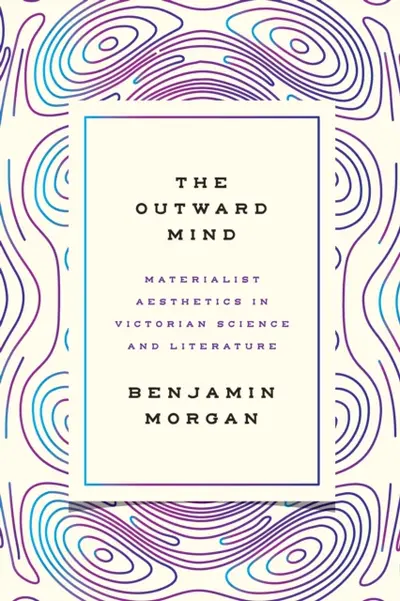
Though underexplored in contemporary scholarship, the Victorian attempts to turn aesthetics into a science remain one of the most fascinating aspects of that era. In The Outward Mind, Benjamin Morgan approaches this period of innovation as an important origin point for current attempts to understand art or beauty using the tools of the sciences. Moving chronologically from natural theology in the early nineteenth century to laboratory psychology in the early twentieth, Morgan draws on little-known archives of Victorian intellectuals such as William Morris, Walter Pater, John Ruskin, and others to argue that scientific studies of mind and emotion transformed the way writers and artists understood the experience of beauty and effectively redescribed aesthetic judgment as a biological adaptation. Looking beyond the Victorian period to humanistic critical theory today, he also shows how the historical relationship between science and aesthetics could be a vital resource for rethinking key concepts in contemporary literary and cultural criticism, such as materialism, empathy, practice, and form. At a moment when the tumultuous relationship between the sciences and the humanities is the subject of ongoing debate, Morgan argues for the importance of understanding the arts and sciences as incontrovertibly intertwined.
Bibliographic data © Gardners Books Ltd.