PDF · English
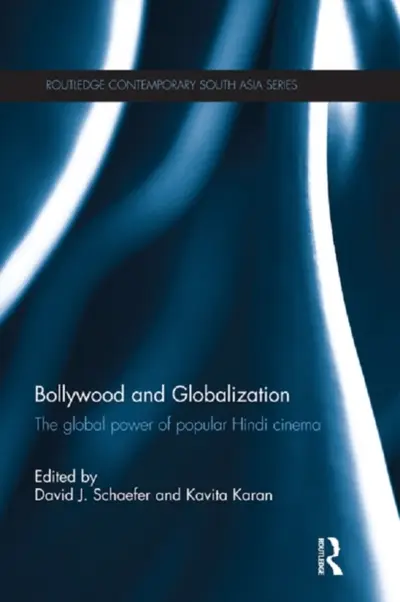
Bollywood and Globalization
The Global Power of Popular Hindi Cinema
Price and availability
$68.99
Available in: Andorra, Austria, Australia, Belgium, Bulgaria, Canada, Switzerland, Cyprus, Czechia, Germany, Denmark, Estonia, Spain, Finland, France, United Kingdom, Guernsey, Greece, Croatia, Hungary, Ireland, Isle of Man, Iceland, Italy, Jersey, Japan, Liechtenstein, Lithuania, Luxembourg, Latvia, Monaco, Malta, Netherlands, Norway, Poland, Portugal, Romania, Sweden, Slovenia, Slovakia, San Marino, United States, Vatican City, South Africa
Stores: US, UK, Canada, EU, Australia.
Sign in to buyThe price is re-checked by the server before payment.
For personal use under the eBook licence.
- Format
- DRM
- Not stated by the publisher
- Language
- English
- Publisher
- Taylor & Francis
- Published
- 20 December 2012
- ISBN
- 9781136196164
- Subjects
- Films, cinema, Cultural studies, Black & Asian studies, India, Film history, theory or criticism, Globalization, International relations
About this book
The field of Bollywood studies has remained predominantly critical, theoretical and historical in focus. This book brings together qualitative and quantitative approaches to tackle empirical questions focusing on the relationship between soft power, hybridity, cinematic texts, and audiences.Adopting a critical-transcultural framework that examines the complex power relations that are manifested through globalized production and consumption practices, the book approaches the study of popular Hindi cinema from three broad perspectives: transcultural production contexts, content trends, and audiences. It firstly outlines the theoretical issues relevant to the spread of popular Indian cinema and emergence of India's growing soft power. The book goes on to report on a series of quantitative studies that examine the patterns of geographical, cultural, political, infrastructural, and artistic power dynamics at work within the highest-grossing popular Hindi films over a 61-year period since independence. Finally, an additional set of studies are presented that quantitatively examine Indian and North American audience consumption practices. The book illuminates issues related to the actualization and maintenance of cinematic soft power dynamics, highlighting Bollywood's increasing integration into and subsumption by globalized practices that are fundamentally altering India's cinematic landscape and, thus, its unique soft power potential. It is of interest to academics working in Film Studies, Globalisation Studies, and International Relations.
Bibliographic data © Gardners Books Ltd.