PDF · English
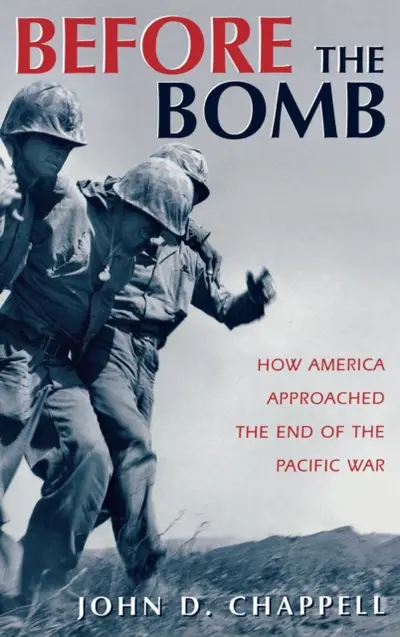
Before The Bomb
How America Approached the End of the Pacific War
Price and availability
$47.99
Available in: Andorra, Austria, Australia, Belgium, Bulgaria, Canada, Switzerland, Cyprus, Czechia, Germany, Denmark, Estonia, Spain, Finland, France, United Kingdom, Guernsey, Greece, Croatia, Hungary, Ireland, Isle of Man, Iceland, Italy, Jersey, Japan, Liechtenstein, Lithuania, Luxembourg, Latvia, Monaco, Malta, Netherlands, Norway, Poland, Portugal, Romania, Sweden, Slovenia, Slovakia, San Marino, United States, Vatican City, South Africa
Stores: US, UK, Canada, EU, Australia.
Sign in to buyThe price is re-checked by the server before payment.
For personal use under the eBook licence.
- Format
- DRM
- Not stated by the publisher
- Language
- English
- Publisher
- The University Press of Kentucky
- Published
- 17 October 2014
- ISBN
- 9780813158624
- Subjects
- East Asia, Far East, USA, 20th century, Asian history, History of the Americas, 20th century history: c 1900 to c 2000, Military history, Second World War, Warfare & defence, General and world history, History of the Americas, Military history, Second World War
About this book
Almost forgotten in the haze of events that followed Nagasaki and Hiroshima, the summer of 1945 witnessed an intense public debate over how best to end the war against Japan. Weary of fighting, the American people were determined to defeat the imperial power that had so viciously attacked them in December 1941, but they were uncertain of the best means to accomplish this goal. Certain of victorythe "inevitable triumph" promised by Franklin Roosevelt immediately after Pearl HarborAmericans became increasingly concerned about the human cost of defeating Japan.Particularly after the brutal Iwo Jima and Okinawa campaigns, syndicated columnists, newspaper editorialists, radio commentators, and others questioned the necessity of invasion. A lengthy naval and aerial siege would have saved lives but might have protracted the war beyond the public's patience. Advertisers filled the media with visions of postwar affluence even as the government was exhorting its citizens to remain dedicated to the war effort. There was heated discussion as well about the morality of firebombing Japanese cities and of using poison gas and other agents of chemical warfare.Chappell provides a balanced assessment of all these debates, grounding his observations in a wealth of primary sources. He also discusses the role of racism, the demand for unconditional surrender, and the government's reaction to public opinion in the decision to drop the atomic bomb. Compelling and controversial, this is the first work to examine the confusing and contradictory climate of the American home front in the months leading up to V-J Day.
Bibliographic data © Gardners Books Ltd.