EPUB · English
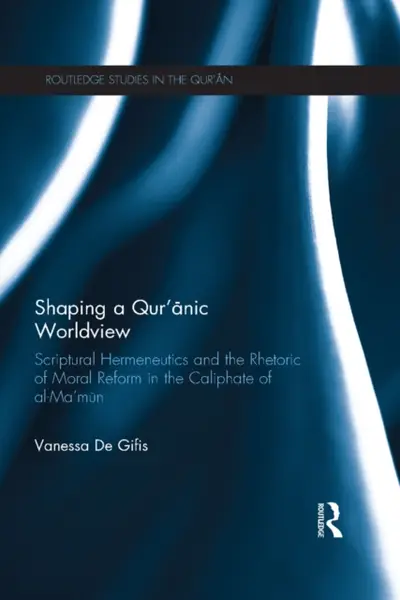
Shaping a Qur'anic Worldview
Scriptural Hermeneutics and the Rhetoric of Moral Reform in the Caliphate of al-Ma'un
Price and availability
$63.99
Available in: Andorra, Austria, Australia, Belgium, Bulgaria, Canada, Switzerland, Cyprus, Czechia, Germany, Denmark, Estonia, Spain, Finland, France, United Kingdom, Guernsey, Greece, Croatia, Hungary, Ireland, Isle of Man, Iceland, Italy, Jersey, Japan, Liechtenstein, Lithuania, Luxembourg, Latvia, Monaco, Malta, Netherlands, Norway, Poland, Portugal, Romania, Sweden, Slovenia, Slovakia, San Marino, United States, Vatican City, South Africa
Stores: US, UK, Canada, EU, Australia.
Sign in to buyThe price is re-checked by the server before payment.
For personal use under the eBook licence.
- Format
- EPUB
- DRM
- Not stated by the publisher
- Language
- English
- Publisher
- Taylor & Francis
- Published
- 16 April 2014
- ISBN
- 9781317817604
- Subjects
- Regional studies, The Koran, Religious social & pastoral thought & activity, Baghdad, Middle Eastern history, The Koran (Qur’an), Criticism and exegesis of sacred texts
About this book
Exploring the subjectivity of the Qur?an's meaning in the world, this book analyses Qur?anic referencing in Muslim political rhetoric. Informed by classical Arabic-Islamic rhetorical theory, the author examines Arabic documents attributed to the ?Abbasid Caliph al-Ma?mun (r. 813-833), whose rule coincided with the maturation of classical Islamic political thought and literary culture. She demonstrates how Qur?anic referencing functions as tropological exegesis, whereby verses in the Qur?an are reinterpreted through the lens of subjective experience. At the same time socio-historical experiences are understood in terms of the Qur?an's moral typology, which consists of interrelated polarities that define good and bad moral characters in mutual orientation. Through strategic deployment of scriptural references within the logical scheme of rhetorical argument, the Caliph constructs moral analogies between paradigmatic characters in the Qur?an and people in his social milieu, and situates himself as moral reformer and guide, in order to persuade his audiences of the necessity of the Caliphate and the religio-moral imperative of obedience to his authority. The Ma?munid case study is indicative of the nature and function of Qur?anic referencing across historical periods, and thus contributes to broader conversations about the impact of the Qur?an on the shaping of Islamic civilization. This book is an invaluable resource for those with an interest in Early Islamic History, Islam and the rhetoric of contemporary Middle East regional and global Islamic politics.
Bibliographic data © Gardners Books Ltd.