PDF · English
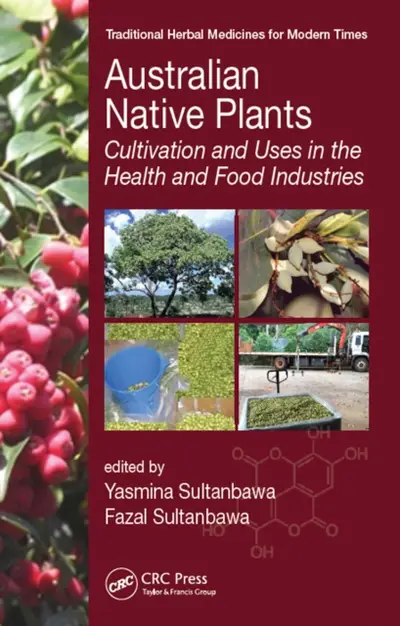
Australian Native Plants
Cultivation and Uses in the Health and Food Industries
Price and availability
$72.99
Available in: Andorra, Austria, Australia, Belgium, Bulgaria, Canada, Switzerland, Cyprus, Czechia, Germany, Denmark, Estonia, Spain, Finland, France, United Kingdom, Guernsey, Greece, Croatia, Hungary, Ireland, Isle of Man, Iceland, Italy, Jersey, Japan, Liechtenstein, Lithuania, Luxembourg, Latvia, Monaco, Malta, Netherlands, Norway, Poland, Portugal, Romania, Sweden, Slovenia, Slovakia, San Marino, United States, Vatican City, South Africa
Stores: US, UK, Canada, EU, Australia.
Sign in to buyThe price is re-checked by the server before payment.
For personal use under the eBook licence.
- Format
- DRM
- Not stated by the publisher
- Language
- English
- Publisher
- CRC Press
- Published
- 19 December 2017
- ISBN
- 9781482257151
- Subjects
- Australia, Complementary medicine, Botany & plant sciences, Food & beverage technology, Agronomy & crop production, Australia, Complementary, integrated and alternative medicine and therapies, Food and beverage technology, Agronomy and crop production
About this book
Australian Native Plants: Cultivation and Uses in the Health and Food Industries provides a comprehensive overview of native food crops commercially grown in Australia that possess nutritional and health properties largely unknown on a global basis. These native foods have been consumed traditionally, have a unique flavor diversity, offer significant health promoting effects, and contain useful functional properties. Australian native plant foods have also been identified for their promising antioxidant and antimicrobial properties that have considerable commercial potential.This book is divided into three parts: The first part reviews the cultivation and production of many Australian native plants (ANP), including Anise Myrtle, Bush Tomato, Desert Raisin, Davidson's Plum, Desert Limes, Australian Finger Lime, Kakadu Plum, Lemon Aspen, Lemon Myrtle, Muntries, Native Pepper, Quandong, Riberry, and Wattle Seed. It then examines the food and health applications of ANP and discusses alternative medicines based on aboriginal traditional knowledge and culture, nutritional characteristics, and bioactive compounds in ANP. In addition, it reviews the anti-obesity and anti-inflammatory properties of ANP and discusses food preservation, antimicrobial activity of ANP, and unique flavors from Australian native plants.The third section covers the commercial applications of ANP. It focuses on native Australian plant extracts and cosmetic applications, processing of native plant foods and ingredients, quality changes during packaging, and storage of Australian native herbs. The final few chapters look into the importance of value chains that connect producers and consumers of native plant foods, new market opportunities for Australian indigenous food plants, and the safety of using native foods as ingredients in the health and food sectors.
Bibliographic data © Gardners Books Ltd.