PDF · English
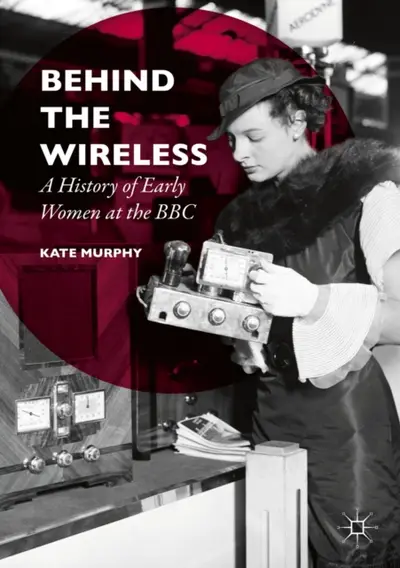
Behind the Wireless
A History of Early Women at the BBC
- History
- Society & social sciences
- Science & mathematics
- Technology & engineering
- Reference
- Lifestyle, food & travel
Price and availability
$33.99
Available in: Andorra, Austria, Australia, Belgium, Bulgaria, Canada, Switzerland, Cyprus, Czechia, Germany, Denmark, Estonia, Spain, Finland, France, United Kingdom, Guernsey, Greece, Croatia, Hungary, Ireland, Isle of Man, Iceland, Italy, Jersey, Japan, Liechtenstein, Lithuania, Luxembourg, Latvia, Monaco, Malta, Netherlands, Norway, Poland, Portugal, Romania, Sweden, Slovenia, Slovakia, San Marino, United States, Vatican City, South Africa
Stores: US, UK, Canada, EU, Australia.
Sign in to buyThe price is re-checked by the server before payment.
For personal use under the eBook licence.
- Format
- DRM
- Not stated by the publisher
- Language
- English
- Publisher
- Palgrave Macmillan UK
- Published
- 28 April 2016
- ISBN
- 9781137491732
- Subjects
- British & Irish history, Social & cultural history, Gender studies, gender groups, Mathematics, Science: general issues, Biology, life sciences, Technology: general issues, Miscellaneous items, Interdisciplinary studies, Social and cultural history, Mathematics and Science, Mathematics, Life sciences: general issues, Engineering: general
About this book
Behind the Wireless tells the story of women at the BBC in the 1920s and 30s. Broadcasting was brand new in Britain and the BBC developed without many of the overt discriminatory practices commonplace at the time. Women were employed at all levels, except the very top, for instance as secretaries, documentary makers, advertising representatives, and librarians. Three women held Director level posts, Hilda Matheson (Director of Talks), Mary Somerville (Director of School Broadcasting), and Isa Benzie (Foreign Director). Women also produced the programmes aimed at female listeners and brought women broadcasters to the microphone. There was an ethos of equality and the chance to rise through the ranks from accounts clerk to accompanist. But lurking behind the facade of modernity were hidden inequalities in recruitment, pay, and promotion and in 1932 a marriage bar was introduced. Kate Murphy examines how and why the interwar BBC created new opportunities for women.
Bibliographic data © Gardners Books Ltd.