PDF · English
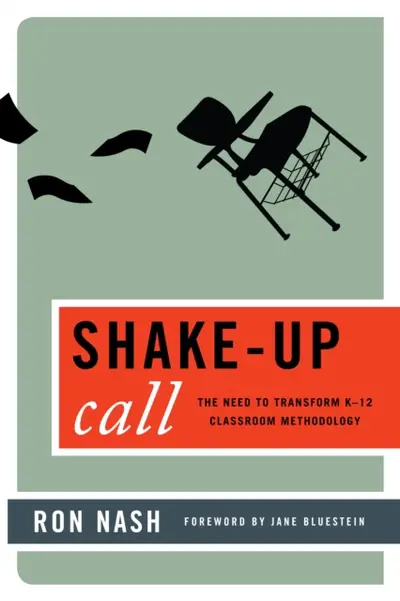
Shake-Up Call
The Need to Transform K–12 Classroom Methodology
Price and availability
$38.99
Available in: Andorra, Austria, Australia, Belgium, Bulgaria, Canada, Switzerland, Cyprus, Czechia, Germany, Denmark, Estonia, Spain, Finland, France, United Kingdom, Guernsey, Greece, Croatia, Hungary, Ireland, Isle of Man, Iceland, Italy, Jersey, Japan, Liechtenstein, Lithuania, Luxembourg, Latvia, Monaco, Malta, Netherlands, Norway, Poland, Portugal, Romania, Sweden, Slovenia, Slovakia, San Marino, United States, Vatican City, South Africa
Stores: US, UK, Canada, EU, Australia.
Sign in to buyThe price is re-checked by the server before payment.
For personal use under the eBook licence.
- Format
- DRM
- Not stated by the publisher
- Language
- English
- Publisher
- Bloomsbury Publishing (USA)
- Published
- 5 October 2012
- Pages
- 136
- ISBN
- 9781475801446
- Subjects
- Teaching skills & techniques, Teaching skills and techniques
About this book
Traditional, teacher-centered classrooms are not serving the needs of our students. Their futures will increasingly demand skill sets in the areas of communication, collaboration, and critical thinking; worksheets, videos, and lectures will not prepare them for the challenges they will face in an increasingly-global economy. Shake-Up Call: The Need to Transform K-12 Classroom Methodology calls on educators at every level to challenge the status quo and take risks on behalf of kids.Ron Nash calls on teachers to move off the stage and become facilitators in a process where students are heavily engaged in their own learning. Teachers need to get kids up, moving, pairing, sharing, and asking questions as they seek to understand content-related information. This book reminds teachers of the importance of feedback in the continuous-improvement process, along with the role of consistency. In order to get students up, moving, and sharing, classrooms must be set up to allow for this movement; Nash includes an appendix full of pictures showing classroom configurations that facilitate movement and academic conversations. The final chapter calls for an end to isolation as teachers move to collaboration and the power of "e;We."e;
Bibliographic data © Gardners Books Ltd.