PDF · English
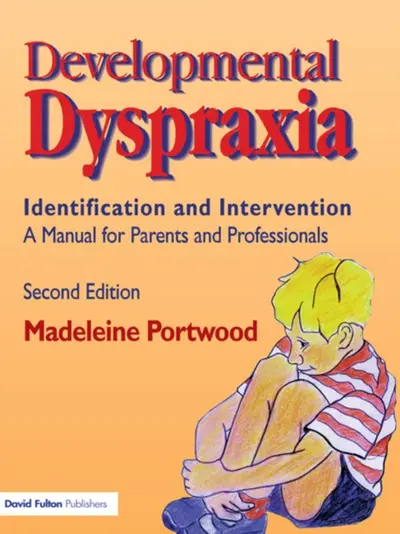
Developmental Dyspraxia
Identification and Intervention: A Manual for Parents and Professionals
Price and availability
$56.99
Available in: Andorra, Austria, Australia, Belgium, Bulgaria, Canada, Switzerland, Cyprus, Czechia, Germany, Denmark, Estonia, Spain, Finland, France, United Kingdom, Guernsey, Greece, Croatia, Hungary, Ireland, Isle of Man, Iceland, Italy, Jersey, Japan, Liechtenstein, Lithuania, Luxembourg, Latvia, Monaco, Malta, Netherlands, Norway, Poland, Portugal, Romania, Sweden, Slovenia, Slovakia, San Marino, United States, Vatican City, South Africa
Stores: US, UK, Canada, EU, Australia.
Sign in to buyThe price is re-checked by the server before payment.
For personal use under the eBook licence.
- Format
- DRM
- Not stated by the publisher
- Language
- English
- Publisher
- Taylor & Francis
- Published
- 6 August 2013
- ISBN
- 9781136790454
- Subjects
- Child & developmental psychology, Teaching of physically disabled students, Teaching of students with specific learning difficulties / needs, Occupational therapy, Child, developmental and lifespan psychology, Teaching of students with learning difficulties or disorders, Neurology and clinical neurophysiology, Occupational therapy
About this book
First published in 2007. Research suggests that between five and ten per cent of all children are dyspraxic. There is much debate about the nature of this disorder and many undiagnosed youngsters are denied access to treatment programmes. In most areas specialist provision is a scarce resource and support, when available, is delivered through parents and teachers. This second edition of Madeleine Portwood's successful manual aims to give parents, teachers and health professionals the confidence to diagnose and assess dyspraxia. Most importantly. it offers them an intervention programme which will significantly improve the cognitive functioning of the dyspraxic child or teenager. Updated in light of the author's new and extensive research, the book provides the reader with: background information on the neurological basis of the condition; strategies for identification/diagnosis and assessment; proven programmes of intervention which can be monitored by anyone closely involved with the child; strategies to improve curricular attainments; remediation activities to develop perceptual and motor skills; programmes to develop self-esteem information about where to find help
Bibliographic data © Gardners Books Ltd.