EPUB · English
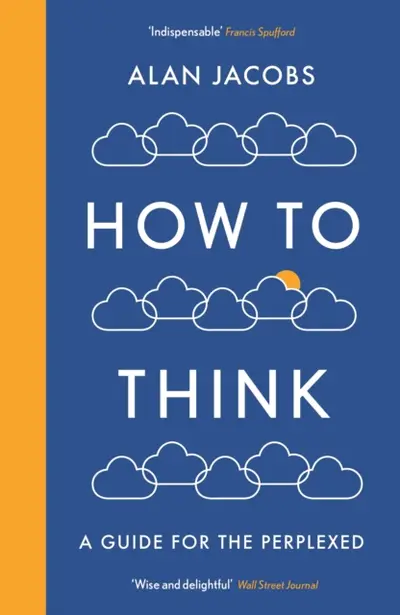
How To Think
A Guide for the Perplexed
Price and availability
Not sold in this region
Available in: Andorra, Austria, Australia, Belgium, Bulgaria, Switzerland, Cyprus, Czechia, Germany, Denmark, Estonia, Spain, Finland, France, United Kingdom, Guernsey, Greece, Croatia, Hungary, Ireland, Isle of Man, Iceland, Italy, Jersey, Japan, Liechtenstein, Lithuania, Luxembourg, Latvia, Monaco, Malta, Netherlands, Norway, Poland, Portugal, Romania, Sweden, Slovenia, Slovakia, San Marino, Vatican City, South Africa
Stores: UK, EU, Australia. Not available in the United States store.
This title cannot be bought in this store yet: its supplier terms, territorial rights or price are still being confirmed.
For personal use under the eBook licence.
- Format
- EPUB
- DRM
- Not stated by the publisher
- Language
- English
- Publisher
- Profile
- Published
- 26 October 2017
- ISBN
- 9781782834069
- Subjects
- Philosophy, Popular philosophy, Cognition & cognitive psychology, Politics & government, Politics and government, Philosophy
About this book
How to Think is a contrarian treatise on why we're not as good at thinking as we assume - but how recovering this lost art can rescue our inner lives from the chaos of modern life. Most of us don't want to think, writes the American essayist Alan Jacobs. Thinking is trouble. It can force us out of familiar, comforting habits, and it can complicate our relationships with like-minded friends. Finally, thinking is slow, and that's a problem when our habits of consuming information (mostly online) leave us lost in the echo chamber of social media, where speed and factionalism trump accuracy and nuance. In this clever, witty book, Jacobs diagnoses the many forces that prevent thought - forces that have only worsened in the age of Twitter, such as "e;alternative facts,"e; and information overload. He also dispels the many myths we hold about what it means to think well. (For example: it's impossible to "e;think for yourself."e;)Drawing on sources as far-flung as the novelist Marilynne Robinson, the basketball legend Wilt Chamberlain, the British philosopher John Stuart Mill and the Christian theologian C.S. Lewis, Jacobs digs into the nuts and bolts of the cognitive process, offering hope that each of us can reclaim our mental lives from the whirlpool of what now passes for public debate. After all, if we can learn to think together, perhaps we can learn to live together.
Bibliographic data © Gardners Books Ltd.