PDF · English
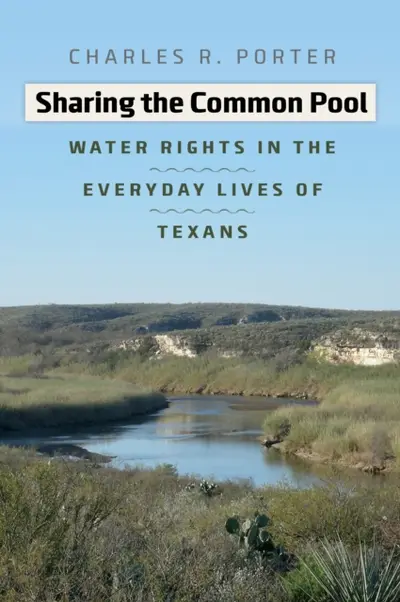
Sharing the Common Pool
Water Rights in the Everyday Lives of Texans
Price and availability
$20.99
Available in: Andorra, Austria, Australia, Belgium, Bulgaria, Canada, Switzerland, Cyprus, Czechia, Germany, Denmark, Estonia, Spain, Finland, France, United Kingdom, Guernsey, Greece, Croatia, Hungary, Ireland, Isle of Man, Iceland, Italy, Jersey, Japan, Liechtenstein, Lithuania, Luxembourg, Latvia, Monaco, Malta, Netherlands, Norway, Poland, Portugal, Romania, Sweden, Slovenia, Slovakia, San Marino, United States, Vatican City, South Africa
Stores: US, UK, Canada, EU, Australia.
Sign in to buyThe price is re-checked by the server before payment.
For personal use under the eBook licence.
- Format
- DRM
- Not stated by the publisher
- Language
- English
- Publisher
- Texas A&M University Press
- Published
- 20 March 2014
- ISBN
- 9781623491703
- Subjects
- Texas, Property & real estate, Energy & natural resources law, Agricultural law, Environmental management, 1KBB-US-SWT, Property and real estate, Energy and natural resources law, Agricultural Law / Fisheries Law, Environmental management
About this book
If all the people, municipalities, agencies, businesses, power plants, and other entities that think they have a right to the water in Texas actually tried to exercise those rights, there would not be enough water to satisfy all claims, no matter how legitimate. In Sharing the Common Pool: Water Rights in the Everyday Lives of Texans, water rights expert Charles Porter explains in the simplest possible terms who has rights to the water in Texas, who determines who has those rights, and who benefits or suffers because of it. The origins of Texas water law, which contains elements of the state's Spanish, English, and Republic heritages, contributed to the development of a system that defines water by where it sits, flows, or falls and assigns its ownership accordingly. Over time, this seemingly logical, even workable, set of expectations has evolved into a tortuous collection of laws, permits, and governing authorities under the onslaught of population growth and competing interestsagriculture, industry, citiesall with insatiable thirsts. In sections that cover ownership, use, regulation, real estate, and policy, Porter lays out in as straightforward a fashion as possible just how we manage (and mismanage) water in this state, what legal cases have guided the debate, and where the future might take us as old rivalries, new demands, and innovative technologiessuch as hydraulic fracturing of oil shale formations (';fracking')help redefine water policy. To learn more about The Meadows Center for Water and the Environment, sponsors of this books series, please click here.
Bibliographic data © Gardners Books Ltd.