EPUB · English
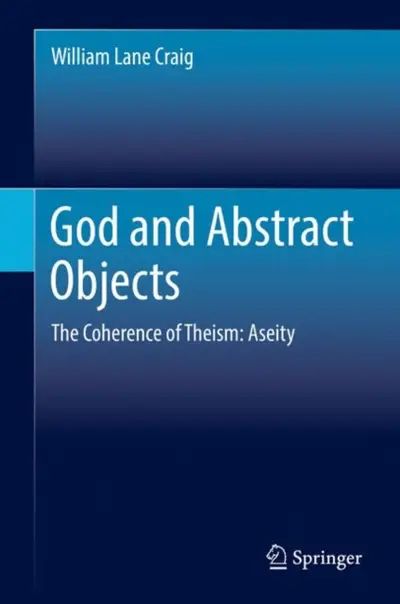
God and Abstract Objects
The Coherence of Theism: Aseity
Price and availability
$188.99
Available in: Andorra, Austria, Australia, Belgium, Bulgaria, Canada, Switzerland, Cyprus, Czechia, Germany, Denmark, Estonia, Spain, Finland, France, United Kingdom, Guernsey, Greece, Croatia, Hungary, Ireland, Isle of Man, Iceland, Italy, Jersey, Japan, Liechtenstein, Lithuania, Luxembourg, Latvia, Monaco, Malta, Netherlands, Norway, Poland, Portugal, Romania, Sweden, Slovenia, Slovakia, San Marino, United States, Vatican City, South Africa
Stores: US, UK, Canada, EU, Australia.
Sign in to buyThe price is re-checked by the server before payment.
For personal use under the eBook licence.
- Format
- EPUB
- DRM
- Not stated by the publisher
- Language
- English
- Publisher
- Springer International Publishing
- Published
- 5 September 2017
- ISBN
- 9783319553849
- Subjects
- Philosophy: metaphysics & ontology, Philosophy of religion, Christianity, Christian theology, Mathematical foundations, Mathematical logic, Mathematical foundations, Mathematical logic, Philosophy: metaphysics and ontology, Philosophy of religion, Christianity, Theology
About this book
This book is an exploration and defense of the coherence of classical theism's doctrine of divine aseity in the face of the challenge posed by Platonism with respect to abstract objects. A synoptic work in analytic philosophy of religion, the book engages discussions in philosophy of mathematics, philosophy of language, metaphysics, and metaontology. It addresses absolute creationism, non-Platonic realism, fictionalism, neutralism, and alternative logics and semantics, among other topics. The book offers a helpful taxonomy of the wide range of options available to the classical theist for dealing with the challenge of Platonism. It probes in detail the diverse views on the reality of abstract objects and their compatibility with classical theism. It contains a most thorough discussion, rooted in careful exegesis, of the biblical and patristic basis of the doctrine of divine aseity. Finally, it challenges the influential Quinean metaontological theses concerning the way in which we makeontological commitments.
Bibliographic data © Gardners Books Ltd.