EPUB · English
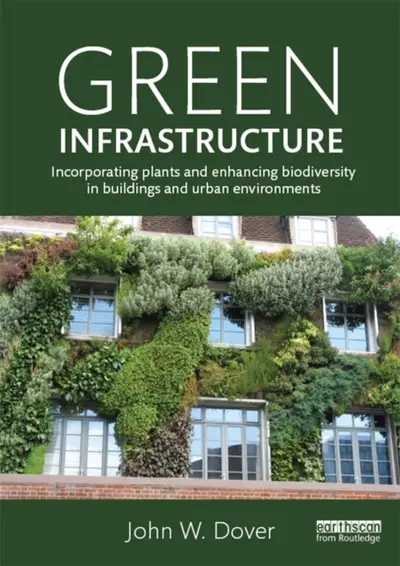
Green Infrastructure
Incorporating Plants and Enhancing Biodiversity in Buildings and Urban Environments
Price and availability
$85.99
Available in: Andorra, Austria, Australia, Belgium, Bulgaria, Canada, Switzerland, Cyprus, Czechia, Germany, Denmark, Estonia, Spain, Finland, France, United Kingdom, Guernsey, Greece, Croatia, Hungary, Ireland, Isle of Man, Iceland, Italy, Jersey, Japan, Liechtenstein, Lithuania, Luxembourg, Latvia, Monaco, Malta, Netherlands, Norway, Poland, Portugal, Romania, Sweden, Slovenia, Slovakia, San Marino, United States, Vatican City, South Africa
Stores: US, UK, Canada, EU, Australia.
Sign in to buyThe price is re-checked by the server before payment.
For personal use under the eBook licence.
- Format
- EPUB
- DRM
- Not stated by the publisher
- Language
- English
- Publisher
- Taylor & Francis
- Published
- 16 July 2015
- ISBN
- 9781136330735
- Subjects
- Environmentally-friendly architecture & design, Landscape art & architecture, Human geography, Applied ecology, Building construction & materials, Trees, wildflowers & plants, Applied ecology, Environmental policy and protocols, Urban and municipal planning and policy
About this book
With more than half of the world's population now living in urban areas, it is vitally important that towns and cities are healthy places to live. The principal aim of this book is to synthesize the disparate literature on the use of vegetation in the built environment and its multifunctional benefits to humans. The author reviews issues such as: contact with wildlife and its immediate and long-term effects on psychological and physical wellbeing; the role of vegetation in removing health-damaging pollutants from the air; green roofs and green walls, which provide insulation, reduce energy use and decrease the carbon footprint of buildings; and structural vegetation such as street trees, providing shading and air circulation whilst also helping to stop flash-floods through surface drainage. Examples are used throughout to illustrate the practical use of vegetation to improve the urban environment and deliver ecosystem services.Whilst the underlying theme is the value of biodiversity, the emphasis is less on existing high-value green spaces (such as nature reserves, parks and gardens), than on the sealed surfaces of urban areas (building surfaces, roads, car parks, plazas, etc.). The book shows how these, and the spaces they encapsulate, can be modified to meet current and future environmental challenges including climate change. The value of existing green space is also covered to provide a comprehensive textbook of international relevance.
Bibliographic data © Gardners Books Ltd.