PDF · English
Artificial Intelligence and Playable Media
Price and availability
$55.99
Available in: Andorra, Austria, Australia, Belgium, Bulgaria, Canada, Switzerland, Cyprus, Czechia, Germany, Denmark, Estonia, Spain, Finland, France, United Kingdom, Guernsey, Greece, Croatia, Hungary, Ireland, Isle of Man, Iceland, Italy, Jersey, Japan, Liechtenstein, Lithuania, Luxembourg, Latvia, Monaco, Malta, Netherlands, Norway, Poland, Portugal, Romania, Sweden, Slovenia, Slovakia, San Marino, United States, Vatican City, South Africa
Stores: US, UK, Canada, EU, Australia.
Sign in to buyThe price is re-checked by the server before payment.
For personal use under the eBook licence.
- Format
- DRM
- Not stated by the publisher
- Language
- English
- Publisher
- Taylor & Francis
- Published
- 2 September 2022
- ISBN
- 9781000648508
- Subjects
- The arts, Cultural studies, Media studies, Political economy, Media, information & communication industries, Digital animation, Games development & programming, Artificial intelligence, Media studies: internet, digital media and society, Digital Humanities / Computer applications in the arts and humanities, Machine learning
About this book
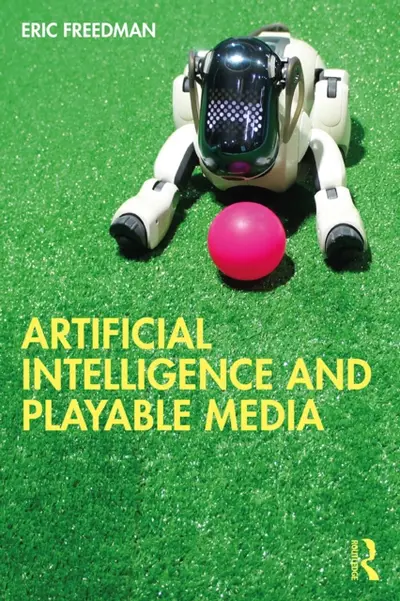
This book introduces readers to artificial intelligence (AI) through the lens of playable media and explores the impact of such software on everyday life.From video games to robotic companions to digital twins, artificial intelligence drives large sectors of the culture industry where play, media and machine learning coexist. This book illustrates how playable media contribute to our sense of self, while also harnessing our data, tightening our bonds with computation and realigning play with the demands of network logic. Author Eric Freedman examines a number of popular media forms - from the Sony AIBO robotic dog, video game developer Naughty Dog's Uncharted and The Last of Us franchises, to Peloton's connected fitness equipment - to lay bare the computational processes that undergird playable media, and addresses the social, cultural, technological and economic forces that continue to shape user-centered experience and design. The case studies are drawn from a number of related research fields, including science and technology studies, media studies and software studies.This book is ideal for media studies students, scholars and practitioners interested in understanding how applied artificial intelligence works in popular, public and visual culture.
Bibliographic data © Gardners Books Ltd.