PDF · English
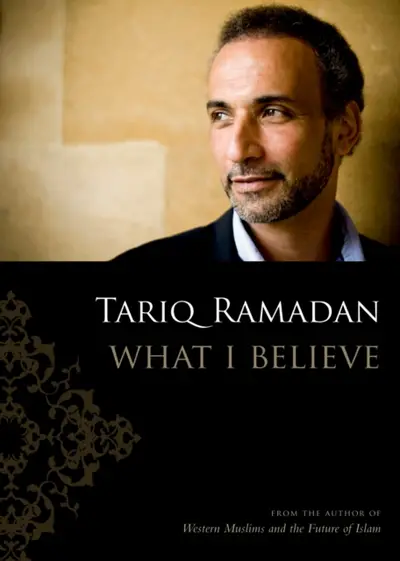
What I Believe
Price and availability
$12.99
Available in: Andorra, Austria, Australia, Belgium, Bulgaria, Canada, Switzerland, Cyprus, Czechia, Germany, Denmark, Estonia, Spain, Finland, France, United Kingdom, Guernsey, Greece, Croatia, Hungary, Ireland, Isle of Man, Iceland, Italy, Jersey, Japan, Liechtenstein, Lithuania, Luxembourg, Latvia, Monaco, Malta, Netherlands, Norway, Poland, Portugal, Romania, Sweden, Slovenia, Slovakia, San Marino, United States, Vatican City, South Africa
Stores: US, UK, Canada, EU, Australia.
Sign in to buyThe price is re-checked by the server before payment.
For personal use under the eBook licence.
- Format
- DRM
- Not stated by the publisher
- Language
- English
- Publisher
- Oxford University Press
- Published
- 6 October 2009
- ISBN
- 9780199736720
- Subjects
- Religious issues & debates, Islam, Political structure & processes, Political structure and processes, QRAM, QRP
About this book
Tariq Ramadan is very much a public figure, named one of Time magazine's most important innovators of the twenty-first century. He is among the leading Islamic thinkers in the West, with a large following around the world. But he has also been a lightning rod for controversy. Indeed, in 2004, Ramadan was prevented from entering the U.S. by the Bush administration and despite two appeals, supported by organizations like the American Academy of Religion and the ACLU, he was barred from the country until spring of 2010, when Secretary of State Hillary Clinton finally lifted the ban. In What I Believe, Ramadan attempts to set the record straight, laying out the basic ideas he stands for in clear and accessible prose. He describes the book as a work of clarification, directed at ordinary citizens, politicians, journalists, and others who are curious (or skeptical) about his positions. Aware that that he is dealing with emotional issues, Ramadan tries to get past the barriers of prejudice and misunderstanding to speak directly, from the heart, to his Muslim and non-Muslim readers alike. In particular, he calls on Western Muslims to escape the mental, social, cultural, and religious ghettos they have created for themselves and become full partners in the democratic societies in which they live. At the same time, he calls for the rest of us to recognize our Muslim neighbors as citizens with rights and responsibilities the same as ours. His vision is of a future in which a shared and confident pluralism becomes a reality at last.
Bibliographic data © Gardners Books Ltd.