EPUB · English
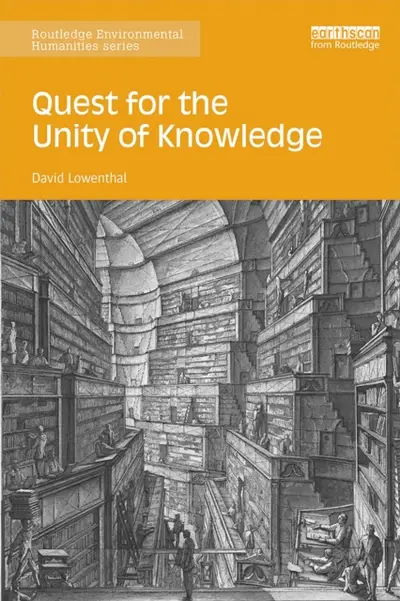
Quest for the Unity of Knowledge
Price and availability
$59.99
Available in: Andorra, Austria, Australia, Belgium, Bulgaria, Canada, Switzerland, Cyprus, Czechia, Germany, Denmark, Estonia, Spain, Finland, France, United Kingdom, Guernsey, Greece, Croatia, Hungary, Ireland, Isle of Man, Iceland, Italy, Jersey, Japan, Liechtenstein, Lithuania, Luxembourg, Latvia, Monaco, Malta, Netherlands, Norway, Poland, Portugal, Romania, Sweden, Slovenia, Slovakia, San Marino, United States, Vatican City, South Africa
Stores: US, UK, Canada, EU, Australia.
Sign in to buyThe price is re-checked by the server before payment.
For personal use under the eBook licence.
- Format
- EPUB
- DRM
- Not stated by the publisher
- Language
- English
- Publisher
- Taylor & Francis
- Published
- 1 November 2018
- ISBN
- 9780429876424
- Subjects
- Philosophy: epistemology & theory of knowledge, History of ideas, Philosophy & theory of education, History of scholarship (principally of social sciences and humanities), Philosophy of science
About this book
Is unity of knowledge possible? Is it desirable? Two rival visions clash. One seeks a single way of explaining everything known and knowable about ourselves and the universe. The other champions diverse modes of understanding served by disparate kinds of evidence. Contrary views pit science against the arts and humanities. Scientists generally laud and seek convergence. Artists and humanists deplore amalgamation as a threat to humane values. These opposing perspectives flamed into hostility in the 1950s "e;Two Cultures"e; clash. They culminate today in new efforts to conjoin insights into physical nature and human culture, and new fears lest such syntheses submerge what the arts and humanities most value. This book, stemming from David Lowenthal's inaugural Stockholm Archipelago Lectures, explores the Two Cultures quarrel's underlying ideologies. Lowenthal shows how ingrained bias toward unity or diversity shapes major issues in education, religion, genetics, race relations, heritage governance, and environmental policy. Aimed at a general academic audience, Quest for the Unity of Knowledge especially targets those in conservation, ecology, history of ideas, museology, and heritage studies.
Bibliographic data © Gardners Books Ltd.