PDF · English
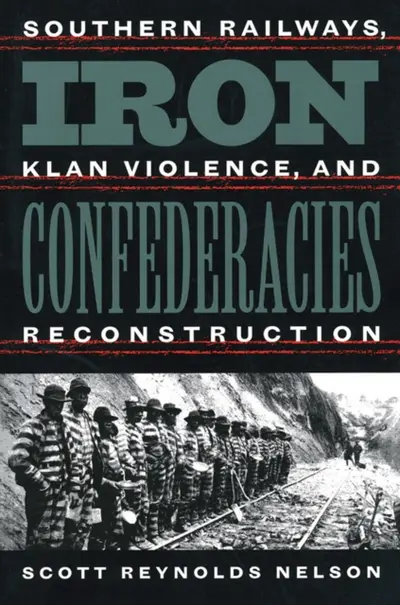
Iron Confederacies
Southern Railways, Klan Violence, and Reconstruction
Price and availability
$40.99
Available in: Andorra, Austria, Australia, Belgium, Bulgaria, Canada, Switzerland, Cyprus, Czechia, Germany, Denmark, Estonia, Spain, Finland, France, United Kingdom, Guernsey, Greece, Croatia, Hungary, Ireland, Isle of Man, Iceland, Italy, Jersey, Japan, Liechtenstein, Lithuania, Luxembourg, Latvia, Monaco, Malta, Netherlands, Norway, Poland, Portugal, Romania, Sweden, Slovenia, Slovakia, San Marino, United States, Vatican City, South Africa
Stores: US, UK, Canada, EU, Australia.
Sign in to buyThe price is re-checked by the server before payment.
For personal use under the eBook licence.
- Format
- DRM
- Not stated by the publisher
- Language
- English
- Publisher
- The University of North Carolina Press
- Published
- 12 October 2005
- ISBN
- 9798890868008
- Subjects
- USA, Southeastern & South Atlantic states, History of the Americas, Modern history to 20th century: c 1700 to c 1900, Social issues & processes, Ethnic minorities & multicultural studies, Sociology: work & labour, Economic history, Railway transport industries, United States of America, USA, History of the Americas
About this book
During Reconstruction, an alliance of southern planters and northern capitalists rebuilt the southern railway system using remnants of the Confederate railroads that had been built and destroyed during the Civil War. In the process of linking Virginia, the Carolinas, and Georgia by rail, this alliance created one of the largest corporations in the world, engendered bitter political struggles, and transformed the South in lasting ways, says Scott Nelson.Iron Confederacies uses the history of southern railways to explore linkages among the themes of states' rights, racial violence, labor strife, and big business in the nineteenth-century South. By 1868, Ku Klux Klan leaders had begun mobilizing white resentment against rapid economic change by asserting that railroad consolidation led to political corruption and black economic success. As Nelson notes, some of the Klans most violent activity was concentrated along the Richmond-Atlanta rail corridor. But conflicts over railroads were eventually resolved, he argues, in agreements between northern railroad barons and Klan leaders that allowed white terrorism against black voters while surrendering states' control over the southern economy.
Bibliographic data © Gardners Books Ltd.