EPUB · English
Making Waste
Leftovers and the Eighteenth-Century Imagination
Price and availability
$33.99
Available in: Andorra, Austria, Australia, Belgium, Bulgaria, Canada, Switzerland, Cyprus, Czechia, Germany, Denmark, Estonia, Spain, Finland, France, United Kingdom, Guernsey, Greece, Croatia, Hungary, Ireland, Isle of Man, Iceland, Italy, Jersey, Japan, Liechtenstein, Lithuania, Luxembourg, Latvia, Monaco, Malta, Netherlands, Norway, Poland, Portugal, Romania, Sweden, Slovenia, Slovakia, San Marino, United States, Vatican City, South Africa
Stores: US, UK, Canada, EU, Australia.
Sign in to buyThe price is re-checked by the server before payment.
For personal use under the eBook licence.
- Format
- EPUB
- DRM
- Not stated by the publisher
- Language
- English
- Publisher
- Princeton University Press
- Published
- 28 December 2009
- ISBN
- 9781400832125
- Subjects
- United Kingdom, Great Britain, England, c 1700 to c 1800, Literary studies: general, Literary studies: c 1500 to c 1800, British & Irish history, Modern history to 20th century: c 1700 to c 1900, Social & cultural history, Ireland, United Kingdom, Great Britain, Literature: history and criticism, General and world history
About this book
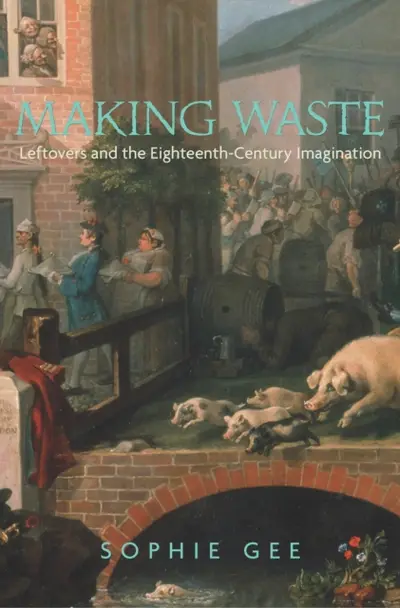
The obsession with waste in eighteenth-century English literatureWhy was eighteenth-century English culture so fascinated with the things its society discarded? Why did Restoration and Augustan writers such as Milton, Dryden, Swift, and Pope describe, catalog, and memorialize the waste matter that their social and political worlds wanted to get rid of-from the theological dregs in Paradise Lost to the excrements in "e;The Lady's Dressing Room"e; and the corpses of A Journal of the Plague Year? In Making Waste, the first book about refuse and its place in Enlightenment literature and culture, Sophie Gee examines the meaning of waste at the moment when the early modern world was turning modern.Gee explains how English writers used contemporary theological and philosophical texts about unwanted and leftover matter to explore secular, literary relationships between waste and value. She finds that, in the eighteenth century, waste was as culturally valuable as it was practically worthless-and that waste paradoxically revealed the things that the culture cherished most.The surprising central insight of Making Waste is that the creation of value always generates waste. Waste is therefore a sign-though a perverse one-that value and meaning have been made. Even when it appears to symbolize civic, economic, and political failure, waste is in fact restorative, a sign of cultural invigoration and imaginative abundance. Challenging the conventional association of Enlightenment culture with political and social improvement, and scientific and commercial progress, Making Waste has important insights for cultural and intellectual history as well as literary studies.
Bibliographic data © Gardners Books Ltd.