PDF · English
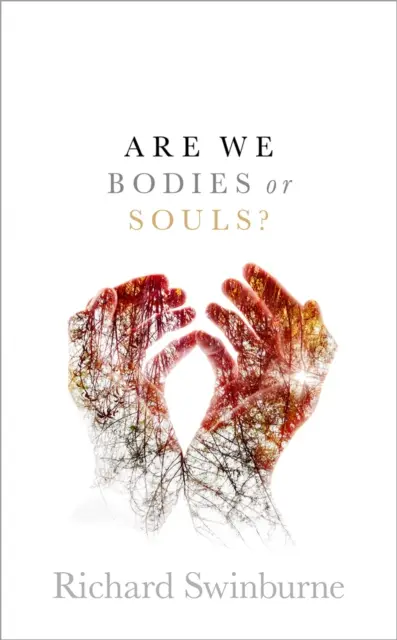
Are We Bodies or Souls?
Price and availability
$9.99
Available in: Andorra, Austria, Australia, Belgium, Bulgaria, Canada, Switzerland, Cyprus, Czechia, Germany, Denmark, Estonia, Spain, Finland, France, United Kingdom, Guernsey, Greece, Croatia, Hungary, Ireland, Isle of Man, Iceland, Italy, Jersey, Japan, Liechtenstein, Lithuania, Luxembourg, Latvia, Monaco, Malta, Netherlands, Norway, Poland, Portugal, Romania, Sweden, Slovenia, Slovakia, San Marino, United States, Vatican City, South Africa
Stores: US, UK, Canada, EU, Australia.
Sign in to buyThe price is re-checked by the server before payment.
For personal use under the eBook licence.
- Format
- DRM
- Not stated by the publisher
- Language
- English
- Publisher
- Oxford University Press
- Published
- 25 July 2019
- ISBN
- 9780192567192
- Subjects
- Philosophy: metaphysics & ontology, Philosophy of mind, Popular philosophy, Philosophy of religion, Popular science, Popular science, Philosophy: metaphysics and ontology, Philosophy of mind, Popular philosophy, Philosophy of religion
About this book
What are humans? What makes us who we are? Many think that we are just complicated machines, or animals that are different from machines only by being conscious. In Are We Bodies or Souls? Richard Swinburne comes to the defence of the soul and presents new philosophical arguments that are supported by modern neuroscience. When scientific advances enable neuroscientists to transplant a part of brain into a new body, he reasons, no matter how much we can find out about their brain activity or conscious experiences we will never know whether the resulting person is the same as before or somebody entirely new. Swinburne thus argues that we are immaterial souls sustained in existence by our brains. Sensations, thoughts, and intentions are conscious events in our souls that cause events in our brains. While scientists might discover some of the laws of nature that determine conscious events and brain events, each person's soul is an individual thing and this is what ultimately makes us who we are.
Bibliographic data © Gardners Books Ltd.