EPUB · English
Baron
Maurice de Hirsch and the Jewish Nineteenth Century
- History
- Literary studies & poetry
- Biography & memoir
- Society & social sciences
- Economics, business & finance
Price and availability
$20.99
Available in: Canada, United States
Stores: US, Canada.
Sign in to buyThe price is re-checked by the server before payment.
For personal use under the eBook licence.
- Format
- EPUB
- DRM
- Not stated by the publisher
- Language
- English
- Publisher
- Stanford University Press
- Published
- 23 August 2022
- ISBN
- 9781503632288
- Subjects
- Europe, United Kingdom, Great Britain, Ireland, East Asia, Far East, c 1800 to c 1900, Biography: historical, political & military, Literature: history & criticism, Literary theory, European history, Modern history to 20th century: c 1700 to c 1900, Social & cultural history, Feminism & feminist theory, International economics, Organizational theory & behaviour, Manufacturing industries, 3MN, DNBH, Literature: history and criticism, Literary theory, JBSF11, International economics, Organizational theory and behaviour, Manufacturing industries, NH, NHD, NHTB
About this book
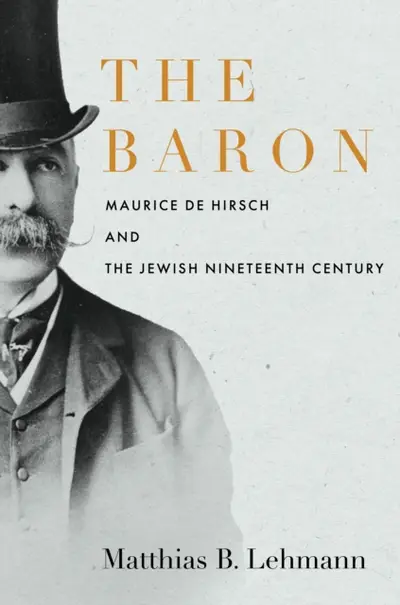
A sweeping biography that opens a window onto the gilded age of Jewish philanthropy. Baron Maurice de Hirsch was one of the emblematic figures of the nineteenth century. Above all, he was the most influential Jewish philanthropist of his time. Today Hirsch is less well known than the Rothschilds, or his gentile counterpart Andrew Carnegie, yet he was, to his contemporaries, the very embodiment of the gilded age of Jewish philanthropy. Hirsch's life provides a singular entry point for understanding Jewish philanthropy and politics in the late nineteenth century, a period when, as now, private benefactors played an outsize role in shaping the collective fate of Jewish communities. Hirsch's vast fortune derived from his role in creating the first rail line linking Western Europe with the Ottoman Empire, what came to be known as the Orient Express. Socializing with the likes of the Austrian crown prince Rudolph and "e;Bertie,"e; Prince of Wales, Hirsch rose to the pinnacle of European aristocratic society, but also found himself the frequent target of vicious antisemitism. This was an era when what it meant to be Jewish-and what it meant to be European-were undergoing dramatic changes. Baron Hirsch was at the center of these historic shifts. While in his time Baron Hirsch was the subject of widespread praise, enraged political commentary, and conspiracy theories alike, his legacy is often overlooked. Responding to the crisis wrought by the mass departure of Jews from the Russian Empire at the turn of the century, Hirsch established the Jewish Colonization Association, with the goal of creating a refuge for the Jews in Argentina. When Theodor Herzl, the founder of Zionism, advertised his plan to create a Jewish state (not without inspiration from Hirsch), he still wondered whether to do so in Palestine or in Argentina-and left the question open. In The Baron, Matthias Lehmann tells the story of this remarkable figure whose life and legacy provide a key to understanding the forces that shaped modern Jewish history.
Bibliographic data © Gardners Books Ltd.