PDF · English
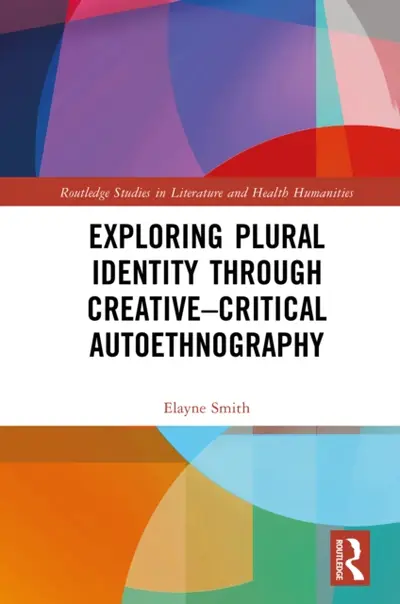
Exploring Plural Identity Through Creative-Critical Autoethnography
Price and availability
$60.99
Available in: Andorra, Austria, Australia, Belgium, Bulgaria, Canada, Switzerland, Cyprus, Czechia, Germany, Denmark, Estonia, Spain, Finland, France, United Kingdom, Guernsey, Greece, Croatia, Hungary, Ireland, Isle of Man, Iceland, Italy, Jersey, Japan, Liechtenstein, Lithuania, Luxembourg, Latvia, Monaco, Malta, Netherlands, Norway, Poland, Portugal, Romania, Sweden, Slovenia, Slovakia, San Marino, United States, Vatican City, South Africa
Stores: US, UK, Canada, EU, Australia.
Sign in to buyThe price is re-checked by the server before payment.
For personal use under the eBook licence.
- Format
- DRM
- Not stated by the publisher
- Language
- English
- Publisher
- Taylor & Francis
- Published
- 17 August 2026
- ISBN
- 9781040579893
- Subjects
- Literary theory, Literary studies: general, Literary theory, Literary studies: general
About this book
This book rethinks the relationship between creative practice and critical inquiry in mental health writing. Combining scholarly analysis with lived experience, it develops a distinctive account of dissociative identity disorder, positioning plural subjectivity not only as its subject, but also as its method. The work blends evocative and analytical approaches to explore how writing can embody unknowing, rupture, and difference: What becomes of life writing and identity processing when memory is discontinuous? Focusing on the often-overlooked early stages of the therapeutic journey- help-seeking, psychoeducation, and meaning-making before "e;living well"e; narratives take hold- it engages critically with life writing, memoir, autobiography, and autoethnography, while interrogating the social, clinical, and media frameworks that shape understandings of Dissociative Identity Disorder (DID), one of the most marginalised forms of neurodiversity. The text theorises as it feels and critiques as it creates, ultimately asking what it means to write-and to be written by-plurality. It will appeal to scholars in the Health Humanities, Literary Studies, especially those with interests in narrative theory and experimental autoethnography, as well as psychologists and sociologists interested in neurodiversity, dissociation, and writing therapy.
Bibliographic data © Gardners Books Ltd.