PDF · English
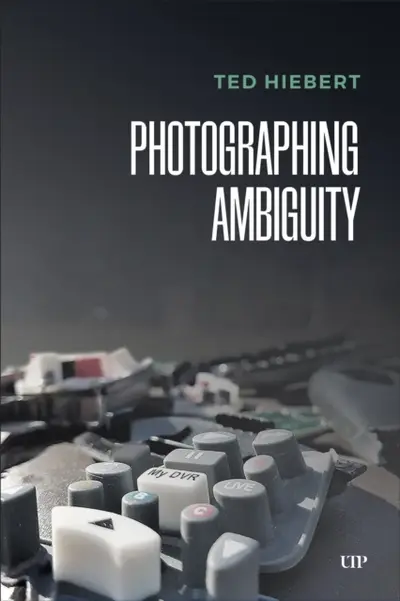
Photographing Ambiguity
Price and availability
$21.99
Available in: Andorra, Austria, Australia, Belgium, Bulgaria, Canada, Switzerland, Cyprus, Czechia, Germany, Denmark, Estonia, Spain, Finland, France, United Kingdom, Guernsey, Greece, Croatia, Hungary, Ireland, Isle of Man, Iceland, Italy, Jersey, Japan, Liechtenstein, Lithuania, Luxembourg, Latvia, Monaco, Malta, Netherlands, Norway, Poland, Portugal, Romania, Sweden, Slovenia, Slovakia, San Marino, United States, Vatican City, South Africa
Stores: US, UK, Canada, EU, Australia.
Sign in to buyThe price is re-checked by the server before payment.
For personal use under the eBook licence.
- Format
- DRM
- Not stated by the publisher
- Language
- English
- Publisher
- University of Toronto Press
- Published
- 2 May 2025
- Pages
- 186
- ISBN
- 9781487537579
- Subjects
- History of art / art & design styles, Art & design styles: from c 1960, Photography & photographs, Communication studies, Popular culture, Media studies, Digital lifestyle, AGA, Photography and photographs, Communication studies, JBCC1, JBCT, Digital Lifestyle and online world: consumer and user guides
About this book
Photographing Ambiguity examines photography as a metaphor for technological culture, arguing that a relational exploration of the medium can shed light on the dominant ideological tendencies of our time. The book advocates for photographic practices that emphasize ambiguity, suggesting that this approach fosters more conscientious, ecological, and creative relationships within the technological ecosystem of contemporary life. Ted Hiebert critiques the notion that images should primarily serve to verify or document the external world. He contends that these quantifiable perspectives, while rooted in historical trends towards technology and data, have become so pervasive that they represent a dominant ideological bias in the twenty-first century. In response to this data-driven consciousness, the book presents a series of exercises designed to cultivate an embodied experience with digital living - not in opposition to the flood of images but within it. Ultimately, Photographing Ambiguity encourages readers to understand photographs not as benchmarks of reality but as ambiguous constructions of our present and future imaginaries.
Bibliographic data © Gardners Books Ltd.