PDF · English
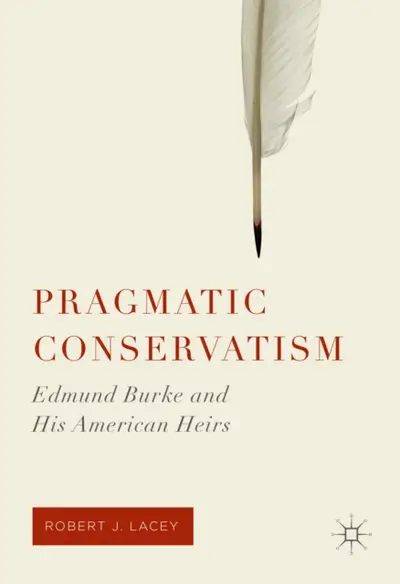
Pragmatic Conservatism
Edmund Burke and His American Heirs
Price and availability
$37.99
Available in: Andorra, Austria, Australia, Belgium, Bulgaria, Canada, Switzerland, Cyprus, Czechia, Germany, Denmark, Estonia, Spain, Finland, France, United Kingdom, Guernsey, Greece, Croatia, Hungary, Ireland, Isle of Man, Iceland, Italy, Jersey, Japan, Liechtenstein, Lithuania, Luxembourg, Latvia, Monaco, Malta, Netherlands, Norway, Poland, Portugal, Romania, Sweden, Slovenia, Slovakia, San Marino, United States, Vatican City, South Africa
Stores: US, UK, Canada, EU, Australia.
Sign in to buyThe price is re-checked by the server before payment.
For personal use under the eBook licence.
- Format
- DRM
- Not stated by the publisher
- Language
- English
- Publisher
- Palgrave Macmillan US
- Published
- 5 August 2016
- ISBN
- 9781137592958
- Subjects
- USA, Western philosophy, from c 1900 -, Social & political philosophy, Political science & theory, Conservatism & right-of-centre democratic ideologies, Constitution: government & the state, The Americas, Politics and government, Political science and theory, History: specific events and topics, Western philosophy from c 1800, Social and political philosophy
About this book
This book is a study of pragmatic conservatism, an underappreciated tradition in modern American political thought, whose origins can be located in the ideas of Edmund Burke. Beginning with an exegesis of Burke's thought, it goes on to show how three twentieth-century thinkers who are not generally recognized as conservatives-Walter Lippmann, Reinhold Niebuhr, and Peter Viereck-carried on the Burkean tradition and adapted it to American democracy. Pragmatic conservatives posit that people, sinful by nature, require guidance from traditions that embody enduring truths wrought by past experience. Yet they also welcome incremental reform driven by established elites, judiciously departing from precedent when necessary. Mindful that truth is never absolute, they eschew ideology and caution against both bold political enterprises and stubborn apologies for the status quo. The book concludes by contrasting this more nuanced brand of conservatism with the radical version that emerged in the wake of the post-war Buckley revolution.
Bibliographic data © Gardners Books Ltd.