PDF · English
Reconciliation with Evil
Price and availability
$20.99
Available in: Andorra, Austria, Australia, Belgium, Bulgaria, Canada, Switzerland, Cyprus, Czechia, Germany, Denmark, Estonia, Spain, Finland, France, United Kingdom, Guernsey, Greece, Croatia, Hungary, Ireland, Isle of Man, Iceland, Italy, Jersey, Japan, Liechtenstein, Lithuania, Luxembourg, Latvia, Monaco, Malta, Netherlands, Norway, Poland, Portugal, Romania, Sweden, Slovenia, Slovakia, San Marino, United States, Vatican City, South Africa
Stores: US, UK, Canada, EU, Australia.
Sign in to buyThe price is re-checked by the server before payment.
For personal use under the eBook licence.
- Format
- DRM
- Not stated by the publisher
- Language
- English
- Publisher
- Kulturverlag Kadmos Berlin
- Published
- 15 October 2024
- ISBN
- 9783967500745
- Subjects
- Memoirs, The Holocaust, Memoirs, The Holocaust
About this book
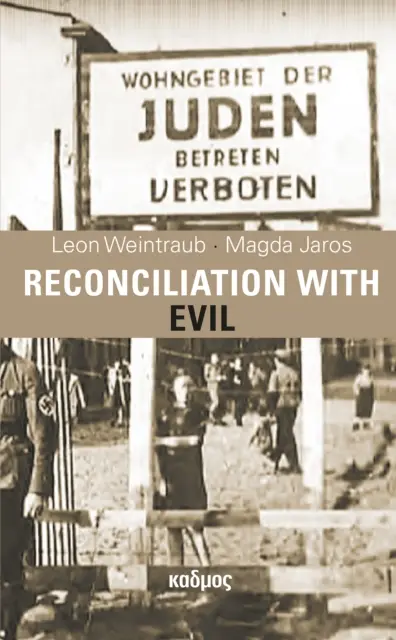
From 1940, Leon Weintraub (born 1926) was forced by the Nazis to live with his family in the Litzmannstadt ghetto and perform forced labour. The skills he learnt there probably saved him from death: when the ghetto was dissolved in 1944, the prisoners were deported to the Auschwitz-Birkenau concentration camp and killed. Weintraub, however, managed to pass himself off as a labour prisoner and thus escape being murdered. In the turmoil of the final months of the war, he survived several of the Nazis' brutal deportation operations until he finally managed to escape on one of the transports. Most of his family did not survive the Holocaust. In conversations with journalist Magda Jaros, Leon Weintraub talks about his childhood in Lodz and his life after the war: his medical studies in Gottingen, his career in Poland and his emigration to Sweden due to the anti-Semitic March riots in 1968. It is the story of reconciliation after unspeakable suffering-but also a warning. Despite the horrors that Leon Weintraub experienced in his life, he constantly believes that dialogue and mutual respect are the way to improve the world. And these are not just words, but are followed by actions. He constantly repeats to all close and familiar people that everyone should approach everyone with respect, because religion, nationality or skin color do not count, but the human-human relationship is the most important. The determination with which he wants to convey his message to Poles, Germans and Jews who have been united and divided by history, arouses my great admiration. Joanna Podolska, director of the Dialogue Center Marek Edelman in Lodz
Bibliographic data © Gardners Books Ltd.