PDF · English
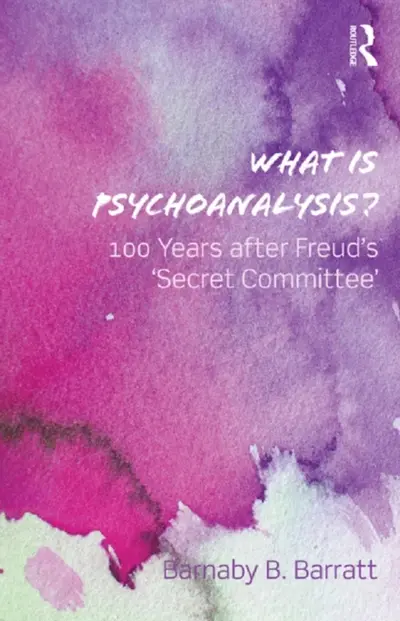
What Is Psychoanalysis?
100 Years after Freud''s ''Secret Committee''
Price and availability
$56.99
Available in: Andorra, Austria, Australia, Belgium, Bulgaria, Canada, Switzerland, Cyprus, Czechia, Germany, Denmark, Estonia, Spain, Finland, France, United Kingdom, Guernsey, Greece, Croatia, Hungary, Ireland, Isle of Man, Iceland, Italy, Jersey, Japan, Liechtenstein, Lithuania, Luxembourg, Latvia, Monaco, Malta, Netherlands, Norway, Poland, Portugal, Romania, Sweden, Slovenia, Slovakia, San Marino, United States, Vatican City, South Africa
Stores: US, UK, Canada, EU, Australia.
Sign in to buyThe price is re-checked by the server before payment.
For personal use under the eBook licence.
- Format
- DRM
- Not stated by the publisher
- Language
- English
- Publisher
- Taylor & Francis
- Published
- 20 May 2013
- ISBN
- 9781136211065
- Subjects
- Psychoanalytical theory (Freudian psychology), Psychoanalytical and Freudian psychology, Philosophy of mind
About this book
2020 American Board & Academy of Psychoanalysis (ABAPsa) book award winner! In a radically powerful interpretation of the human condition, this book redefines the discipline of psychoanalysis by examining its fundamental assumptions about the unconscious mind, the nature of personal history, our sexualities, and the significance of the "e;Oedipus Complex"e;. With striking originality, Barratt explains the psychoanalytic way of exploring our inner realities, and criticizes many of the schools of "e;psychoanalytic psychotherapy"e; that emerged and prospered during the 20th century.In 1912, Sigmund Freud formed a "e;Secret Committee"e;, charged with the task of protecting and advancing his discoveries. In this book, Barratt argues both that this was a major mistake, making the discipline more like a religious organization than a science, and that this continues to infuse psychoanalytic institutes today. What is Psychoanalysis? takes each of the four "e;fundamental concepts"e; that Freud himself said were the cornerstones of his science of healing, and offers a fresh and detailed re-examination of their contemporary importance. Barratt's analysis demonstrates how the profound work, as well as the playfulness, of psychoanalysis, provides us with a critique of the ideologies that support oppression and exploitation on the social level. It will be of interest to advanced students of clinical psychology or philosophy, as well as psychoanalysts and psychotherapists.
Bibliographic data © Gardners Books Ltd.