PDF · English
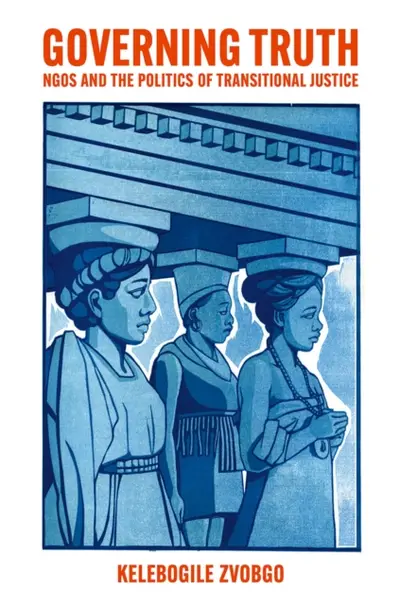
Governing Truth
NGOs and the Politics of Transitional Justice
Price and availability
$22.99
Available in: Andorra, Austria, Australia, Belgium, Bulgaria, Canada, Switzerland, Cyprus, Czechia, Germany, Denmark, Estonia, Spain, Finland, France, United Kingdom, Guernsey, Greece, Croatia, Hungary, Ireland, Isle of Man, Iceland, Italy, Jersey, Japan, Liechtenstein, Lithuania, Luxembourg, Latvia, Monaco, Malta, Netherlands, Norway, Poland, Portugal, Romania, Sweden, Slovenia, Slovakia, San Marino, United States, Vatican City, South Africa
Stores: US, UK, Canada, EU, Australia.
Sign in to buyThe price is re-checked by the server before payment.
For personal use under the eBook licence.
- Format
- DRM
- Not stated by the publisher
- Language
- English
- Publisher
- Oxford University Press
- Published
- 2 February 2026
- ISBN
- 9780197815694
- Subjects
- International relations, Human rights, International business, International relations, Human rights, civil rights, International business
About this book
Who governs transitional justice--the international regime that aims to deliver truth, justice, and reparations for political violence and guarantees that the violence will not be repeated? Existing research tends to suggest that the adoption, design, and implementation of transitional justice mechanisms are primarily, if not exclusively, shaped by national governments. In Governing Truth, Kelebogile Zvobgo argues instead that transitional justice is transnational and led by civil society groups, both domestic and international. The book draws on statistical analyses of original data on truth commissions and interviews with government officials, former commission leaders, representatives of international organizations and NGOs, and human rights stakeholders from around the world. Zvobgo demonstrates that a worldwide network of civil society groups the global transitional justice network leverages advocacy, technical expertise, and operational assistance to give governments the impetus to adopt transitional justice mechanisms, design them to succeed, and follow up on them with additional measures. In a strategic system of coordination, civil society groups alternate leadership and support roles and exercise their comparative advantages in information, experience, material resources, and political power at different stages to enhance their overall chances of success. Governing Truth thus proposes a new model of transnational advocacy the burden sharing model which goes beyond policy advocacy and brings attention to civil society's essential role in policy design, delivery, and follow-up in transitional justice processes.
Bibliographic data © Gardners Books Ltd.