EPUB · English
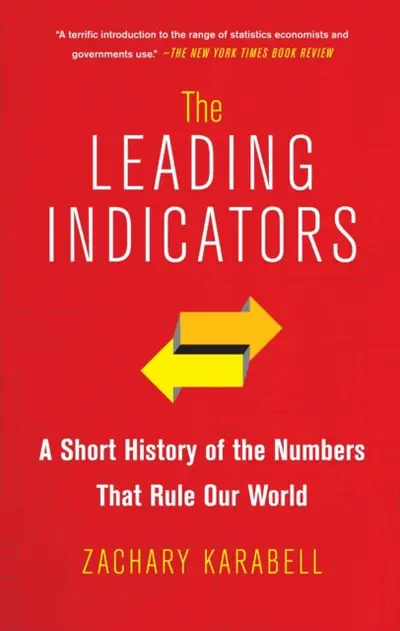
Leading Indicators
A Short History of the Numbers That Rule Our World
Price and availability
$20.99
Not available to buy yet.
Available in: Andorra, Austria, Australia, Belgium, Bulgaria, Canada, Switzerland, Cyprus, Czechia, Germany, Denmark, Estonia, Spain, Finland, France, United Kingdom, Guernsey, Greece, Croatia, Hungary, Ireland, Isle of Man, Iceland, Italy, Jersey, Japan, Liechtenstein, Lithuania, Luxembourg, Latvia, Monaco, Malta, Netherlands, Norway, Poland, Portugal, Romania, Sweden, Slovenia, Slovakia, San Marino, United States, Vatican City, South Africa
Stores: US, UK, Canada, EU, Australia.
This title cannot be bought in this store yet: its supplier terms, territorial rights or price are still being confirmed.
For personal use under the eBook licence.
- Format
- EPUB
- DRM
- Not stated by the publisher
- Language
- English
- Publisher
- Simon & Schuster
- Published
- 11 February 2014
- ISBN
- 9781451651256
- Subjects
- Economics, Econometrics, Economic statistics, Economics, Econometrics and economic statistics
About this book
How did we come by the leading indicators we place such stock in? We allocate trillions of dollars and make public policy and personal decisions based upon them, but what do they really tell us?The leading indicators shape our lives intimately, but few of us know where these numbers come from, what they mean, or why they rule the world. GDP, inflation, unemployment, trade, and a host of averages determine whether we feel optimistic or pessimistic about the countrys future and our own. They dictate whether businesses hire and invest, or fire and hunker down, whether governments spend trillions or try to reduce debt, whether individuals marry, buy a car, get a mortgage, or look for a job.Zachary Karabell tackles the history and the limitations of each of our leading indicators. The solution is not to invent new indicators, but to become less dependent on a few simple figures and tap into the data revolution. We have unparalleled power to find the information we need, but only if we let go of the outdated indicators that lead and mislead us.
Bibliographic data © Gardners Books Ltd.