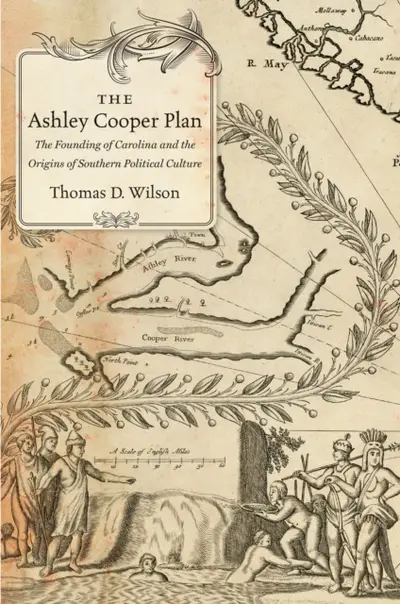
EPUB · English
Ashley Cooper Plan
The Founding of Carolina and the Origins of Southern Political Culture
Price and availability
$21.99
Available in: Andorra, Austria, Australia, Belgium, Bulgaria, Canada, Switzerland, Cyprus, Czechia, Germany, Denmark, Estonia, Spain, Finland, France, United Kingdom, Guernsey, Greece, Croatia, Hungary, Ireland, Isle of Man, Iceland, Italy, Jersey, Japan, Liechtenstein, Lithuania, Luxembourg, Latvia, Monaco, Malta, Netherlands, Norway, Poland, Portugal, Romania, Sweden, Slovenia, Slovakia, San Marino, United States, Vatican City, South Africa
Stores: US, UK, Canada, EU, Australia.
Sign in to buyThe price is re-checked by the server before payment.
For personal use under the eBook licence.
- Format
- EPUB
- DRM
- Not stated by the publisher
- Language
- English
- Publisher
- The University of North Carolina Press
- Published
- 6 January 2016
- ISBN
- 9781469626291
- Subjects
- USA, Southeastern & South Atlantic states, Central Southern states, c 1600 to c 1700, History of the Americas, Early modern history: c 1450/1500 to c 1700, Colonialism & imperialism, Human geography, United States of America, USA, US South, History of the Americas, Human geography, Local history
About this book
In this highly original work, Thomas D. Wilson offers surprising new insights into the origins of the political storms we witness today. Wilson connects the Ashley Cooper Plan a seventeenth-century model for a well-ordered society imagined by Anthony Ashley Cooper (1st Earl of Shaftesbury) and his protg John Locke to current debates about views on climate change, sustainable development, urbanism, and professional expertise in general. In doing so, he examines the ways that the city design, political culture, ideology, and governing structures of the Province of Carolina have shaped political acts and public policy even in the present. Wilson identifies one of the fundamental paradoxes of American history: although Ashley Cooper and Locke based their model of rational planning on assumptions of equality, the lure of profits to be had from slaveholding soon undermined its utopian qualities. Wilson argues that in the transition to a slave society, the Gothic framework of the Carolina Fundamental Constitutions was stripped of its original imperative of class reciprocity, reverberating in American politics to this day.Reflecting on contemporary culture, Wilson argues that the nations urban-rural divide rooted in this earlier period has corrosively influenced American character, pitting one demographic segment against another. While illuminating the political philosophies of Ashley Cooper and Locke as they relate to cities, Wilson also provides those currently under attack by antiurbanists from city planners to climate scientists with a deeper understanding of the intellectual origins of a divided America and the long history that reinforces it.
Bibliographic data © Gardners Books Ltd.