PDF · English
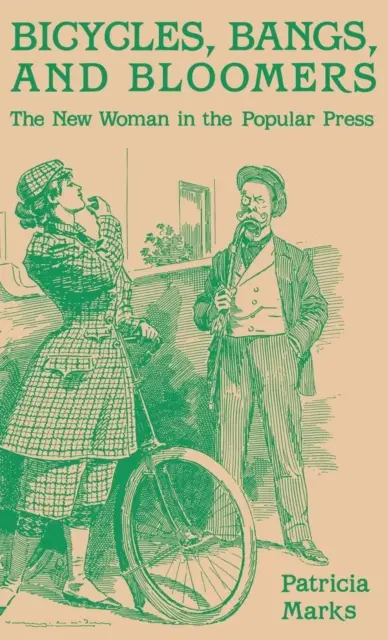
Bicycles, Bangs, and Bloomers
The New Woman in the Popular Press
Price and availability
$47.99
Available in: Andorra, Austria, Australia, Belgium, Bulgaria, Canada, Switzerland, Cyprus, Czechia, Germany, Denmark, Estonia, Spain, Finland, France, United Kingdom, Guernsey, Greece, Croatia, Hungary, Ireland, Isle of Man, Iceland, Italy, Jersey, Japan, Liechtenstein, Lithuania, Luxembourg, Latvia, Monaco, Malta, Netherlands, Norway, Poland, Portugal, Romania, Sweden, Slovenia, Slovakia, San Marino, United States, Vatican City, South Africa
Stores: US, UK, Canada, EU, Australia.
Sign in to buyThe price is re-checked by the server before payment.
For personal use under the eBook licence.
- Format
- DRM
- Not stated by the publisher
- Language
- English
- Publisher
- The University Press of Kentucky
- Published
- 17 October 2014
- ISBN
- 9780813158631
- Subjects
- United Kingdom, Great Britain, USA, Journalistic style guides, General & world history, British & Irish history, History of the Americas, Modern history to 20th century: c 1700 to c 1900, Media studies, Feminism & feminist theory, Gender studies: women, Media studies, Gender studies: women and girls, Feminism and feminist theory, News media and journalism, European history, History of the Americas
About this book
The so-called "New Woman"that determined and free-wheeling figure in "rational" dress, demanding education, suffrage, and a career-was a frequent target for humorists in the popular press of the late nineteenth century. She invariably stood in contrast to the "womanly woman," a traditional figure bound to domestic concerns and a stereotype away from which many women were inexorably moving.Patricia Marks's book, based on a survey of satires and caricatures drawn from British and American periodicals of the 1880s and 1890s, places the popular view of the New Woman in the context of the age and explores the ways in which humor both reflected and shaped readers' perceptions of women's changing roles.Not all commentators of the period attacked the New Woman; even conservative satirists were more concerned with poverty, prostitution, and inadequate education than with defending so-called "femininity." Yet, as the influx of women into the economic mainstream changed social patterns, the popular press responded with humor ranging from the witty to the vituperative.Many of Marks's sources have never been reprinted and exist only in unindexed periodicals. Her book thus provides a valuable resource for those studying the rise of feminism and the influence of popular culture, as well as literary historians and critics seeking to place more formal genres within a cultural framework. Historians, sociologists, and others with an interest in Victorianism will find in it much to savor.
Bibliographic data © Gardners Books Ltd.