PDF · English
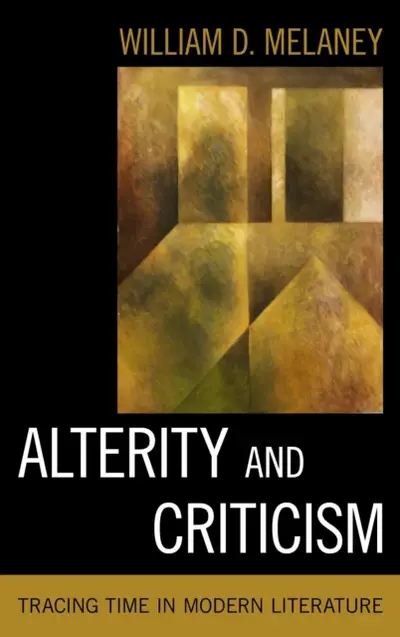
Alterity and Criticism
Tracing Time in Modern Literature
Price and availability
$48.99
Available in: Andorra, Austria, Australia, Belgium, Bulgaria, Canada, Switzerland, Cyprus, Czechia, Germany, Denmark, Estonia, Spain, Finland, France, United Kingdom, Guernsey, Greece, Croatia, Hungary, Ireland, Isle of Man, Iceland, Italy, Jersey, Japan, Liechtenstein, Lithuania, Luxembourg, Latvia, Monaco, Malta, Netherlands, Norway, Poland, Portugal, Romania, Sweden, Slovenia, Slovakia, San Marino, United States, Vatican City, South Africa
Stores: US, UK, Canada, EU, Australia.
Sign in to buyThe price is re-checked by the server before payment.
For personal use under the eBook licence.
- Format
- DRM
- Not stated by the publisher
- Language
- English
- Publisher
- Bloomsbury Publishing (USA)
- Published
- 8 November 2017
- Pages
- 238
- ISBN
- 9781786601513
- Subjects
- Literature: history & criticism, Literary studies: from c 1900 -, Phenomenology & Existentialism, Social & political philosophy, Literature: history and criticism, Literary studies: c 1900 to c 2000, QDHR5, QDTS
About this book
How does the theme of the other--as person, experience or alternative conceptual scheme-allow us to reassess the role of the self in literary texts? This book employs phenomenology and semiotics to argue that modern literature is strongly concerned with the role of time in the construction of the self. Alterity and Criticism: Retracing Time in Modern Literature argues that the role of time in canonical literature underlies the experience of alterity and requires a new hermeneutic to clarify how the self emerges in literary texts. Romantic poetry from Goethe to Shelley and the modern prose tradition from Flaubert to Butor constitute different traditions but also indicate, on a textual basis, how alterity performs a crucial role in reading, thus encouraging us to interpret literary texts in terms of the related concerns of self, other and time. The author examines the phenomenology of Emmanuel Levinas and Wolfgang Iser, as well as the cultural semiotics of Julia Kristeva, to argue that modern literature provides the occasion for a new understanding of the self in time and, in this way, addresses some of the pressing literary problems of our own period.
Bibliographic data © Gardners Books Ltd.