PDF · English
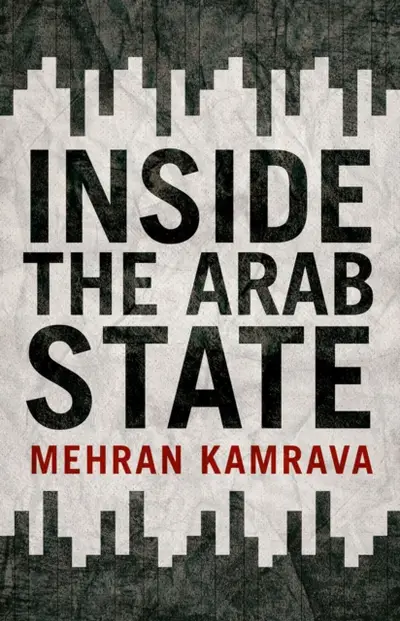
Inside the Arab State
Price and availability
$19.99
Available in: Andorra, Austria, Australia, Belgium, Bulgaria, Canada, Switzerland, Cyprus, Czechia, Germany, Denmark, Estonia, Spain, Finland, France, United Kingdom, Guernsey, Greece, Croatia, Hungary, Ireland, Isle of Man, Iceland, Italy, Jersey, Japan, Liechtenstein, Lithuania, Luxembourg, Latvia, Monaco, Malta, Netherlands, Norway, Poland, Portugal, Romania, Sweden, Slovenia, Slovakia, San Marino, United States, Vatican City, South Africa
Stores: US, UK, Canada, EU, Australia.
Sign in to buyThe price is re-checked by the server before payment.
For personal use under the eBook licence.
- Format
- DRM
- Not stated by the publisher
- Language
- English
- Publisher
- Oxford University Press
- Published
- 15 August 2018
- ISBN
- 9780190934699
- Subjects
About this book
The 2011 Arab uprisings and their subsequent aftermath have thrown into question some of our long-held assumptions about the foundational aspects of the Arab state. While the regional and international consequences of the uprisings continue to unfold with great unpredictability, their ramifications for the internal lives of the states in which they unfolded are just as dramatic and consequential. States historically viewed as models of strength and stability have been shaken to their foundations. Borders thought impenetrable have collapsed; sovereignty and territoriality have been in flux. This book examines some of the central questions facing observers and scholars of the Middle East concerning the nature of power and politics before and after 2011 in the Arab world. The focus of the book revolves around the very nature of politics and the exercise of power in the Arab world, conceptions of the state, its functions and institutions, its sources of legitimacy, and basic notions underlying it such as sovereignty and nationalism. Inside the Arab State adopts a multi-disciplinary approach, examining a broad range of political, economic, and social variables. It begins with an examination of politics, and more specifically political institutions, in the Arab world from the 1950s on, tracing the travail of states, and the wounds they inflicted on society and on themselves along the way, until the eruption of the 2011 uprisings. The uprisings, the states' responses to them, and efforts by political leaders to carve out for themselves means of legitimacy are also discussed, as are the reasons for the emergence and rise of Daesh and the Islamic State. Power, I argue, and increasingly narrow conceptions of it in terms of submission and conformity, remains at the heart of Arab politics, popular protests and yearnings for change notwithstanding. Much has changed in the Arab world over the last several decades. But even more has stayed the same.
Bibliographic data © Gardners Books Ltd.