PDF · English
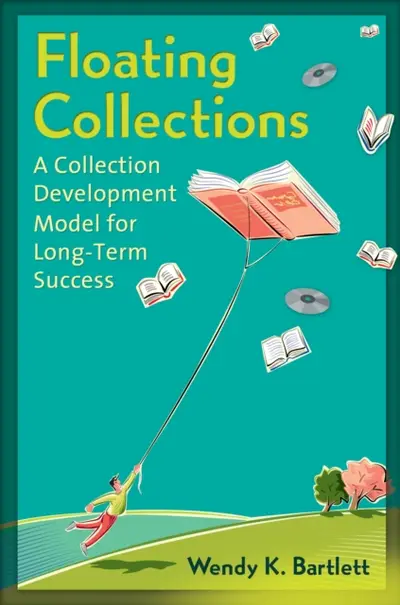
Floating Collections
A Collection Development Model for Long-Term Success
Price and availability
$60.99
Available in: Andorra, Austria, Australia, Belgium, Bulgaria, Canada, Switzerland, Cyprus, Czechia, Germany, Denmark, Estonia, Spain, Finland, France, United Kingdom, Guernsey, Greece, Croatia, Hungary, Ireland, Isle of Man, Iceland, Italy, Jersey, Japan, Liechtenstein, Lithuania, Luxembourg, Latvia, Monaco, Malta, Netherlands, Norway, Poland, Portugal, Romania, Sweden, Slovenia, Slovakia, San Marino, United States, Vatican City, South Africa
Stores: US, UK, Canada, EU, Australia.
Sign in to buyThe price is re-checked by the server before payment.
For personal use under the eBook licence.
- Format
- DRM
- Not stated by the publisher
- Language
- English
- Publisher
- Bloomsbury Publishing (USA)
- Published
- 13 January 2014
- Pages
- 152
- ISBN
- 9781598847444
- Subjects
- Library & information sciences, Acquisitions & collection development, Library and information sciences / Museology, Acquisitions and collection development
About this book
This easy-to-use, comprehensive guide shows how to establish a floating collection in any library-regardless of type or size.Despite its increasing popularity, there are few published works about floating and floating collections. Virtually no one has addressed critical long-term issues like core collections, material selection, and weeding after floating has taken place. Floating Collections: A Collection Development Model for Long-Term Success makes all of this urgently needed information available in one place.This unique guidebook defines "e;floating,"e; explains the pros and cons, explores the impact of floating collections on collection work, and enables readers to establish a floating collection in any library. Not only does this book help librarians to decide rationally if, how, and when to float, it also outlines a how-to process for maximum success based on the real-world experience of many systems and identifies ways to maximize the advantages of a floating collection. In addition, the author addresses common collection concerns and outlines workable solutions for problematic issues that can arise.
Bibliographic data © Gardners Books Ltd.