PDF · English
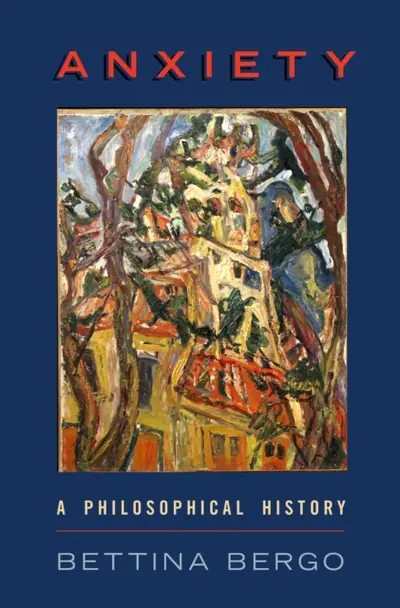
Anxiety
A Philosophical History
Price and availability
$47.99
Available in: Andorra, Austria, Australia, Belgium, Bulgaria, Canada, Switzerland, Cyprus, Czechia, Germany, Denmark, Estonia, Spain, Finland, France, United Kingdom, Guernsey, Greece, Croatia, Hungary, Ireland, Isle of Man, Iceland, Italy, Jersey, Japan, Liechtenstein, Lithuania, Luxembourg, Latvia, Monaco, Malta, Netherlands, Norway, Poland, Portugal, Romania, Sweden, Slovenia, Slovakia, San Marino, United States, Vatican City, South Africa
Stores: US, UK, Canada, EU, Australia.
Sign in to buyThe price is re-checked by the server before payment.
For personal use under the eBook licence.
- Format
- DRM
- Not stated by the publisher
- Language
- English
- Publisher
- Oxford University Press
- Published
- 13 November 2020
- ISBN
- 9780197539729
- Subjects
- Philosophy, Western philosophy: c 1600 to c 1900, History of ideas, Psychological theory & schools of thought, Cognition & cognitive psychology, JBCC9, Psychological theory, systems, schools and viewpoints, Cognition and cognitive psychology, QD, QDH
About this book
Anxiety looms large in historical works of philosophy and psychology. It is an affect, philosopher Bettina Bergo argues, subtler and more persistent than our emotions, and points toward the intersection of embodiment and cognition. While scholars who focus on the work of luminaries as Freud, Levinas, or Kant often study this theme in individual works, they seldom draw out the deep and significant connections between various approaches to anxiety. This volume provides a sweeping study of the uncanny career of anxiety in nineteenth and twentieth century European thought. Anxiety threads itself through European intellectual life, beginning in receptions of Kant's transcendental philosophy and running into Levinas' phenomenology; it is a core theme in Schelling, Kierkegaard, Schopenhauer, and Nietzsche. As a symptom of an interrogation that strove to take form in European intellectual culture, Angst passes through Schelling's romanticism into Schopenhauer's metaphysical vitalism, before it is explored existentially by Kierkegaard. And, in the twentieth century, it proves an extremely central concept for Heidegger, even as Freud is exploring its meaning and origin over a thirty year-long period of psychoanalytic development. This volume opens new windows onto philosophers who have never yet been put into dialogue, providing a rigorous intellectual history as it connects themes across two centuries, and unearths the deep roots of our own present-day "e;age of anxiety."e;
Bibliographic data © Gardners Books Ltd.