PDF · English
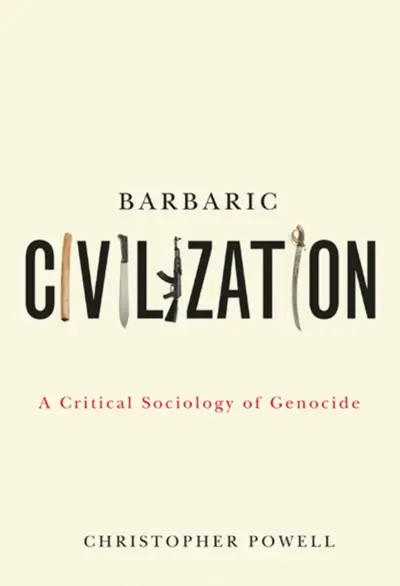
Barbaric Civilization
A Critical Sociology of Genocide
Price and availability
$35.99
Available in: Andorra, Austria, Australia, Belgium, Bulgaria, Canada, Switzerland, Cyprus, Czechia, Germany, Denmark, Estonia, Spain, Finland, France, United Kingdom, Guernsey, Greece, Croatia, Hungary, Ireland, Isle of Man, Iceland, Italy, Jersey, Japan, Liechtenstein, Lithuania, Luxembourg, Latvia, Monaco, Malta, Netherlands, Norway, Poland, Portugal, Romania, Sweden, Slovenia, Slovakia, San Marino, United States, Vatican City, South Africa
Stores: US, UK, Canada, EU, Australia.
Sign in to buyThe price is re-checked by the server before payment.
For personal use under the eBook licence.
- Format
- DRM
- Not stated by the publisher
- Language
- English
- Publisher
- McGill-Queen's University Press
- Published
- 15 June 2011
- ISBN
- 9780773585560
- Subjects
- Genocide & ethnic cleansing, Sociology, Sociology, NHTZ
About this book
Why have the largest mass murders in human history taken place in the past hundred years? Why have European colonizers so often denied the humanity of the colonized? In Barbaric Civilization, Christopher Powell advances a radical thesis to answer these questions: that civilization produces genocides.From its beginnings in the early twelfth century, the Western civilizing process has involved two interconnected transformations: the monopolization of military force by sovereign states and the cultivation in individuals of habits and dispositions of the kind that we call civilized. The combined forward movement of these processes channels violent struggles for social dominance into symbolic performances. But even as the civilizing process frees many subjects from the threat of direct physical force, violence accumulates behind the scenes and at the margins of the social order, kept there by a deeply habituated performance of dominance and subordination called deferentiation. When deferentiation fails, difference becomes dangerous and genocide becomes possible.Connecting historical developments with everyday life occurrences, and discussing examples ranging from thirteenth-century Languedoc to 1994 Rwanda, Powell offers an original framework for analyzing, comparing, and discussing genocides as variable outcomes of a common underlying social system, raising unsettling questions about the contradictions of Western civilization and the possibility of a world without genocide.
Bibliographic data © Gardners Books Ltd.