PDF · English
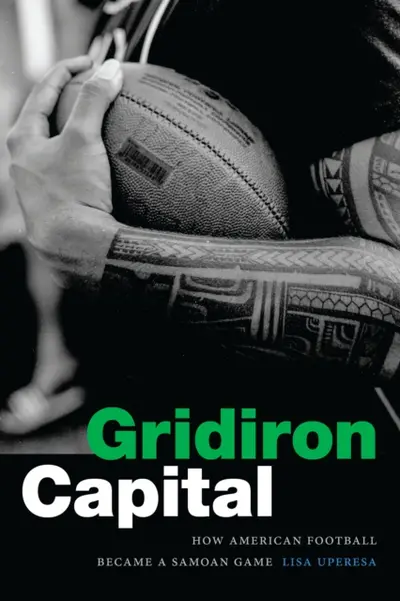
Gridiron Capital
How American Football Became a Samoan Game
Price and availability
$36.99
Available in: Andorra, Austria, Australia, Belgium, Bulgaria, Canada, Switzerland, Cyprus, Czechia, Germany, Denmark, Estonia, Spain, Finland, France, United Kingdom, Guernsey, Greece, Croatia, Hungary, Ireland, Isle of Man, Iceland, Italy, Jersey, Japan, Liechtenstein, Lithuania, Luxembourg, Latvia, Monaco, Malta, Netherlands, Norway, Poland, Portugal, Romania, Sweden, Slovenia, Slovakia, San Marino, United States, Vatican City, South Africa
Stores: US, UK, Canada, EU, Australia.
Sign in to buyThe price is re-checked by the server before payment.
For personal use under the eBook licence.
- Format
- DRM
- Not stated by the publisher
- Language
- English
- Publisher
- Duke University Press
- Published
- 18 July 2022
- ISBN
- 9781478022701
- Subjects
- Samoa, Indigenous peoples, Sociology: sport & leisure, Social & cultural anthropology, ethnography, American football, Samoan Islands, JBSL11, Sociology: sport and leisure, Social and cultural anthropology, SFBD
About this book
Since the 1970s, a "e;Polynesian Pipeline"e; has brought football players from American Samoa to Hawaii and the mainland United States to play at the collegiate and professional levels. In Gridiron Capital Lisa Uperesa charts the cultural and social dynamics that have made football so central to Samoan communities. For Samoan athletes, football is not just an opportunity for upward mobility; it is a way to contribute to, support, and represent their family, village, and nation. Drawing on ethnographic fieldwork, archival research, and media analysis, Uperesa shows how the Samoan ascendancy in football is underpinned by the legacies of US empire and a set of imperial formations that mark Indigenous Pacific peoples as racialized subjects of US economic aid and development. Samoan players succeed by becoming entrepreneurs: building and commodifying their bodies and brands to enhance their football stock and market value. Uperesa offers insights into the social and physical costs of pursuing a football career, the structures that compel Pacific Islander youth toward athletic labor, and the possibilities for safeguarding their health and wellbeing in the future.Duke University Press Scholars of Color First Book Award recipient
Bibliographic data © Gardners Books Ltd.