PDF · English
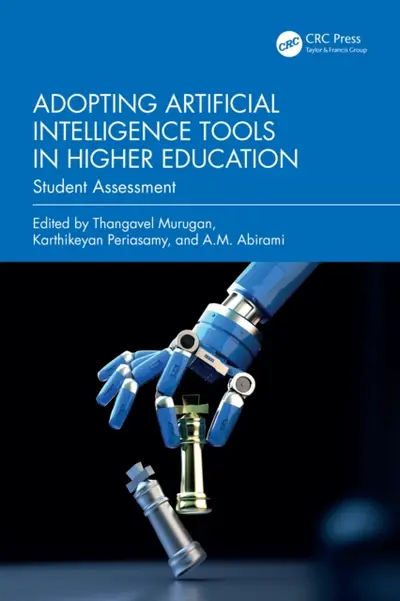
Adopting Artificial Intelligence Tools in Higher Education
Student Assessment
Price and availability
$59.99
Available in: Andorra, Austria, Australia, Belgium, Bulgaria, Canada, Switzerland, Cyprus, Czechia, Germany, Denmark, Estonia, Spain, Finland, France, United Kingdom, Guernsey, Greece, Croatia, Hungary, Ireland, Isle of Man, Iceland, Italy, Jersey, Japan, Liechtenstein, Lithuania, Luxembourg, Latvia, Monaco, Malta, Netherlands, Norway, Poland, Portugal, Romania, Sweden, Slovenia, Slovakia, San Marino, United States, Vatican City, South Africa
Stores: US, UK, Canada, EU, Australia.
Sign in to buyThe price is re-checked by the server before payment.
For personal use under the eBook licence.
- Format
- DRM
- Not stated by the publisher
- Language
- English
- Publisher
- CRC Press
- Published
- 27 May 2025
- ISBN
- 9781040358948
- Subjects
- Examinations & assessment, Higher & further education, tertiary education, Teaching skills & techniques, Educational equipment & technology, computer-aided learning (CAL), Artificial intelligence, Education: examinations and assessment, Educational equipment and technology, computer-aided learning (CAL), Machine learning
About this book
This edited volume explores the adoption of artificial intelligence (AI) tools in higher education, specifically focusing on student assessment. It examines the integration of various AI tools within higher education, discussing the challenges and opportunities they present and the innovative solutions they offer.The chapters explore various issues surrounding the use of AI in higher education and propose potential solutions. The book begins with a systematic exploration of AI's potential, presenting innovative ways to ensure fair and accurate assessments that enhance the overall quality of education. It highlights the benefits of AI-powered grading systems that streamline assessment processes, provide timely feedback, and promote fair evaluations. The text discusses how machine learning algorithms can revolutionize assessment methods, allowing individualized, adaptive testing tailored to each student's unique needs. Furthermore, it examines natural language processing (NLP) techniques for evaluating student essays by analyzing linguistic features such as grammar and semantic coherence. Moreover, it highlights AI-powered virtual assistants offering personalized feedback and learning recommendations. Case studies illustrate successful AI assessment implementations and methods for improving AI-based evaluations. The book also addresses engagement and success in the post-COVID-19 context. It raises concerns about plagiarism and academic integrity, comparing AI solutions to traditional methods while exploring the challenges associated with adopting AI in education. Educators, administrators, academics, and technology experts working in institutes of higher learning will find this volume compelling. It is also suitable for students taking courses in educational technology, e-learning, and digital learning.
Bibliographic data © Gardners Books Ltd.