EPUB · English
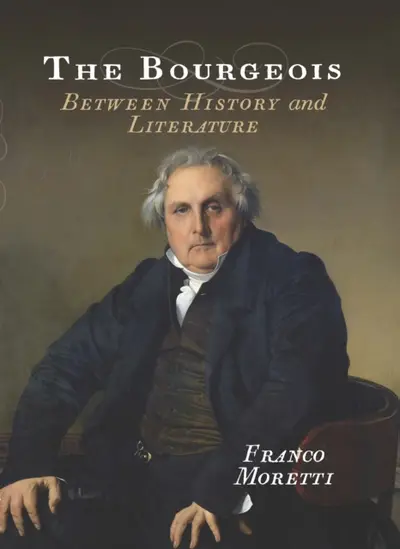
Bourgeois
Between History and Literature
Price and availability
Not sold in this region
Available in: Andorra, Austria, Australia, Belgium, Bulgaria, Switzerland, Cyprus, Czechia, Germany, Denmark, Estonia, Spain, Finland, France, United Kingdom, Guernsey, Greece, Croatia, Hungary, Ireland, Isle of Man, Iceland, Italy, Jersey, Japan, Liechtenstein, Lithuania, Luxembourg, Latvia, Monaco, Malta, Netherlands, Norway, Poland, Portugal, Romania, Sweden, Slovenia, Slovakia, San Marino, Vatican City, South Africa
Stores: UK, EU, Australia. Not available in the United States store.
This title cannot be bought in this store yet: its supplier terms, territorial rights or price are still being confirmed.
For personal use under the eBook licence.
- Format
- EPUB
- DRM
- Not stated by the publisher
- Language
- English
- Publisher
- Verso
- Published
- 4 June 2013
- ISBN
- 9781781684856
- Subjects
- Europe, Literary studies: general, Literary studies: from c 1900 -, Social & cultural history, Social classes, Literary studies: general, Social classes, Social and cultural history
About this book
"e;The bourgeois ... Not so long ago, this notion seemed indispensable to social analysis; these days, one might go years without hearing it mentioned. Capitalism is more powerful than ever, but its human embodiment seems to have vanished. 'I am a member of the bourgeois class, feel myself to be such, and have been brought up on its opinions and ideals,' wrote Max Weber, in 1895. Who could repeat these words today? Bourgeois 'opinions and ideals'-what are they?"e;Thus begins Franco Moretti's study of the bourgeois in modern European literature-a major new analysis of the once-dominant culture and its literary decline and fall. Moretti's gallery of individual portraits is entwined with the analysis of specific keywords-"e;useful"e; and "e;earnest,"e; "e;efficiency,"e; "e;influence,"e; "e;comfort,"e; "e;roba"e;-and of the formal mutations of the medium of prose. From the "e;working master"e; of the opening chapter, through the seriousness of nineteenth-century novels, the conservative hegemony of Victorian Britain, the "e;national malformations"e; of the Southern and Eastern periphery, and the radical self-critique of Ibsen's twelve-play cycle, the book charts the vicissitudes of bourgeois culture, exploring the causes for its historical weakness, and for its current irrelevance.
Bibliographic data © Gardners Books Ltd.