EPUB · English
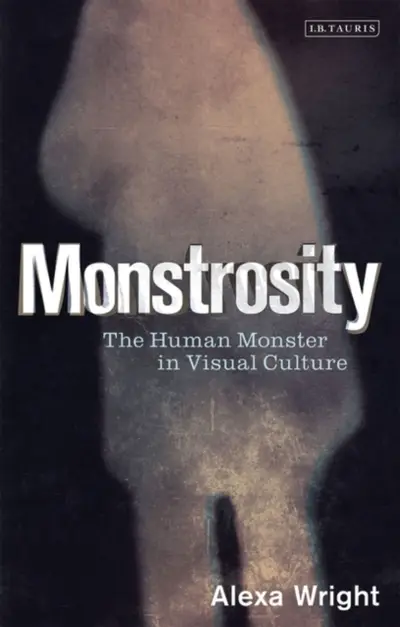
Monstrosity
The Human Monster in Visual Culture
Price and availability
$31.99
Available in: Andorra, Austria, Australia, Belgium, Bulgaria, Canada, Switzerland, Cyprus, Czechia, Germany, Denmark, Estonia, Spain, Finland, France, United Kingdom, Guernsey, Greece, Croatia, Hungary, Ireland, Isle of Man, Iceland, Italy, Jersey, Japan, Liechtenstein, Lithuania, Luxembourg, Latvia, Monaco, Malta, Netherlands, Norway, Poland, Portugal, Romania, Sweden, Slovenia, Slovakia, San Marino, United States, Vatican City, South Africa
Stores: US, UK, Canada, EU, Australia.
Sign in to buyThe price is re-checked by the server before payment.
For personal use under the eBook licence.
- Format
- EPUB
- DRM
- Not stated by the publisher
- Language
- English
- Publisher
- Bloomsbury Publishing
- Published
- 30 June 2013
- Pages
- 224
- ISBN
- 9780857733351
- Subjects
- Theory of art, Art styles not defined by date, Philosophy: aesthetics, Cultural studies, Sociology, Social & cultural anthropology, ethnography, Theory of art, AGA, JBCC, Sociology, Social and cultural anthropology, QDTN
About this book
From the 'Monster of Ravenna' to the 'Elephant Man', Myra Hindley and Ted Bundy, the visualisation of 'real', human monsters has always played a part in how society sees itself. But what is the function of a monster? Why do we need to embody and represent what is monstrous? This book investigates the appearance of the human monster in Western culture, both historically and in our contemporary society. It argues that images of real (rather than fictional) human monsters help us both to identify and to interrogate what constitutes normality; we construct what is acceptable in humanity by depicting what is not quite acceptable. By exploring theories and examples of abnormality, freakishness, madness, otherness and identification, Alexa Wright demonstrates how monstrosity and the monster are social and cultural constructs. However, it soon becomes clear that the social function of the monster however altered a form it takes remains constant; it is societal self-defence allowing us to keep perceived monstrosity at a distance.Through engaging with the work of Michel Foucault, Julia Kristeva and Canguilhem (to name but a few) Wright scrutinises and critiques the history of a mode of thinking. She reassesses and explodes conventional concepts of identity, obscuring the boundaries between what is 'normal' and what is not.
Bibliographic data © Gardners Books Ltd.