PDF · English
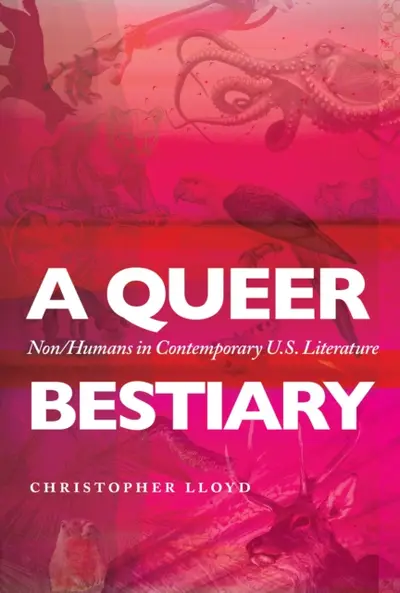
Queer Bestiary
Non/Humans in Contemporary U.S. Literature
Price and availability
Price unavailable
Available in: Andorra, Austria, Australia, Belgium, Bulgaria, Canada, Switzerland, Cyprus, Czechia, Germany, Denmark, Estonia, Spain, Finland, France, United Kingdom, Guernsey, Greece, Croatia, Hungary, Ireland, Isle of Man, Iceland, Italy, Jersey, Japan, Liechtenstein, Lithuania, Luxembourg, Latvia, Monaco, Malta, Netherlands, Norway, Poland, Portugal, Romania, Sweden, Slovenia, Slovakia, San Marino, United States, Vatican City, South Africa
Stores: US, UK, Canada, EU, Australia.
This title cannot be bought in this store yet: its supplier terms, territorial rights or price are still being confirmed.
For personal use under the eBook licence.
- Format
- DRM
- Not stated by the publisher
- Language
- English
- Publisher
- University of Georgia Press
- Published
- 15 October 2026
- ISBN
- 9780820380537
- Subjects
- USA, Literary studies: general, Literature: history and criticism
About this book
The slippery and mutable boundaries between humans and nonhumans are frequently figured queerly in twenty-first-century U.S. literature. This innovative book examines the ways that nonhumans are brought into intimate, estranging contact with humans in contemporary novels, short stories, poems, and nonfiction. Through detailed attention to a selection of real and imagined flora, fauna, and other phenomena in the bestiary form-from horses to taxidermy to dogs and extinction-the book probes the ways in which the humans and the nonhumans are queerly entangled. Organized like a Medieval bestiary, this book contributes to a range of fields, including contemporary literary studies, American studies, posthuman and animal studies, queer studies, and more. Non/human relations are explored through close readings of fiction by writers, including Ocean Vuong, Justin Torres, Kristen Arnett, and Percival Everett; poetry by Danez Smith, Tommy Pico, Franny Choi, and Donika Kelly; and nonfiction by Mark Doty, Sabrina Imbler, and Alexis Pauline Gumbs, among others. In all, A Queer Bestiary argues that the human has never been solid, distinct, or singular; that various nonhumans open questions of queerness; and that recent literary representations of humans and nonhumans queer the boundaries between these two categories.
Bibliographic data © Gardners Books Ltd.