EPUB · English
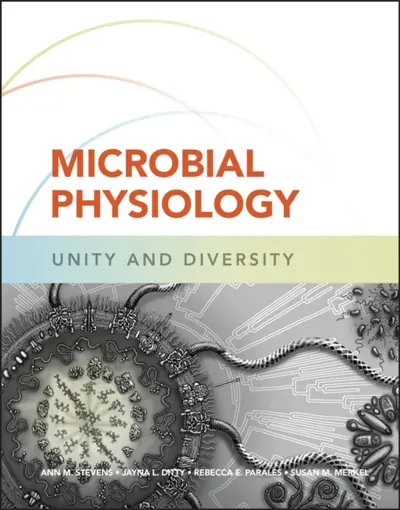
Microbial Physiology
Unity and Diversity
Price and availability
$128.99
Available in: Andorra, Austria, Australia, Belgium, Bulgaria, Canada, Switzerland, Cyprus, Czechia, Germany, Denmark, Estonia, Spain, Finland, France, United Kingdom, Guernsey, Greece, Croatia, Hungary, Ireland, Isle of Man, Iceland, Italy, Jersey, Japan, Liechtenstein, Lithuania, Luxembourg, Latvia, Monaco, Malta, Netherlands, Norway, Poland, Portugal, Romania, Sweden, Slovenia, Slovakia, San Marino, United States, Vatican City, South Africa
Stores: US, UK, Canada, EU, Australia.
Sign in to buyThe price is re-checked by the server before payment.
For personal use under the eBook licence.
- Format
- EPUB
- DRM
- Not stated by the publisher
- Language
- English
- Publisher
- Wiley
- Published
- 4 April 2024
- ISBN
- 9781683673699
- Subjects
- Biology, life sciences, Biology, life sciences
About this book
MICROBIAL PHYSIOLOGY UNITY AND DIVERSITY Explore the fascinating world of microbes in Microbial Physiology: Unity and Diversity. This comprehensive, advanced undergraduate-level textbook takes readers on a captivating journey through the intricate and often underappreciated world of microbial physiology, emphasizing both the common features that unify microbes and the diversity that makes them unique. In Part I: Unity, the book lays a strong foundation in the basics of microbial physiology. Delve into the three domains of life, get an intimate look at the metabolic pathways that fuel the microbial world, and take a deep dive into the cellular components that constitute a microbe. Further, explore the principles of cellular growth, bioenergetics, and the mechanics of respiration and fermentation. The Unity section concludes with a comprehensive discussion of regulation at posttranslational and gene levels, paving the way for a rich understanding of microbial function. Part II: Diversity, takes the reader into the broad and versatile world of microbial metabolism, exploring the range of energy sources and metabolic pathways microbes employ. This section leads readers through topics such as autotrophy, phototrophy, chemotrophy, and microbial contributions to the carbon, sulfur, and nitrogen cycles. The complexity of microbial cell envelope structures, transport processes, and protein transport are explored, along with bacterial motility, chemotaxis, and the phenomenon of quorum sensing. The section concludes with an exploration of stress responses and the diverse lifestyles that bacteria can adopt. Microbial Physiology: Unity and Diversity will engage readers with its accessible yet thorough treatment of this critical field of microbiology. Each chapter contains detailed illustrations that concisely explain complex topics and concludes with robust end-of-chapter questions that not only test understanding but also provide an opportunity for readers to dig deeper into the content. This book is a must-have for students studying microbiology, as well as researchers and professionals keen to brush up their knowledge or explore new facets of microbial physiology.
Bibliographic data © Gardners Books Ltd.