PDF · English
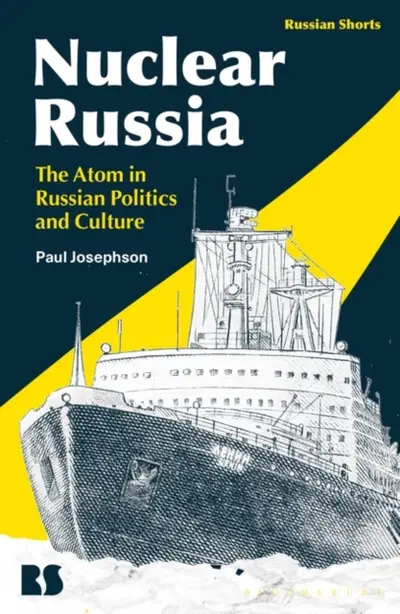
Nuclear Russia
The Atom in Russian Politics and Culture
Price and availability
$15.99
Available in: Andorra, Austria, Australia, Belgium, Bulgaria, Canada, Switzerland, Cyprus, Czechia, Germany, Denmark, Estonia, Spain, Finland, France, United Kingdom, Guernsey, Greece, Croatia, Hungary, Ireland, Isle of Man, Iceland, Italy, Jersey, Japan, Liechtenstein, Lithuania, Luxembourg, Latvia, Monaco, Malta, Netherlands, Norway, Poland, Portugal, Romania, Sweden, Slovenia, Slovakia, San Marino, United States, Vatican City, South Africa
Stores: US, UK, Canada, EU, Australia.
Sign in to buyThe price is re-checked by the server before payment.
For personal use under the eBook licence.
- Format
- DRM
- Not stated by the publisher
- Language
- English
- Publisher
- Bloomsbury Publishing
- Published
- 20 October 2022
- Pages
- 160
- ISBN
- 9781350272576
- Subjects
- Russia, 20th century, European history, History of science, History of engineering & technology, 3MP, NHD, History of science, History of engineering and technology
About this book
In the first cultural and political history of the Russian nuclear age, Paul Josephson describes the rise of nuclear physics in the USSR, the enthusiastic pursuit of military and peaceful nuclear programs through the Chernobyl disaster and the collapse of the Soviet Union, and the ongoing, self-proclaimed 'renaissance' of nuclear power in Russia in the 21st century. At the height of their power, the Soviets commanded 39,000 nuclear warheads, yet claimed to be servants of the 'peaceful atom' which they also pursued avidly. This book examines both military and peaceful Soviet and post-Soviet nuclear programs for the long dur e before the war, during the Cold War, and in Russia to the present whilst also grappling with the political and ideological importance of nuclear technologies, the associated economic goals, the social and environmental costs, and the cultural embrace of nuclear power. Nuclear Russia probes the juncture of history of science and technology, political and cultural history, and environmental history. It considers the atom in Russian society as a reflection of Leninist technological utopianism, Cold War imperatives, scientific hubris, public acceptance, and a state desire to conquer nature. Furthermore the book examines the vital and perhaps unexpected significance of ethnicity and gender in nuclear history by looking at how Kazakhs and Nenets lost their homelands and their health in Russia in the wake of nuclear testing, as well as the surprising sexualization of the taming of the female atom in the Russian 'Miss Atom' contests that commenced in the 21st century.
Bibliographic data © Gardners Books Ltd.