EPUB · English
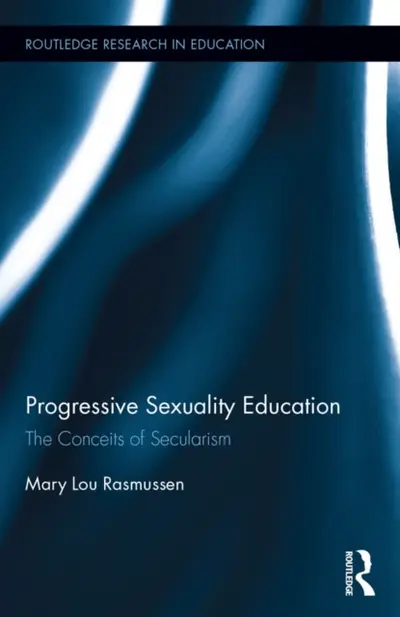
Progressive Sexuality Education
The Conceits of Secularism
Price and availability
$63.99
Available in: Andorra, Austria, Australia, Belgium, Bulgaria, Canada, Switzerland, Cyprus, Czechia, Germany, Denmark, Estonia, Spain, Finland, France, United Kingdom, Guernsey, Greece, Croatia, Hungary, Ireland, Isle of Man, Iceland, Italy, Jersey, Japan, Liechtenstein, Lithuania, Luxembourg, Latvia, Monaco, Malta, Netherlands, Norway, Poland, Portugal, Romania, Sweden, Slovenia, Slovakia, San Marino, United States, Vatican City, South Africa
Stores: US, UK, Canada, EU, Australia.
Sign in to buyThe price is re-checked by the server before payment.
For personal use under the eBook licence.
- Format
- EPUB
- DRM
- Not stated by the publisher
- Language
- English
- Publisher
- Taylor & Francis
- Published
- 5 October 2015
- ISBN
- 9781135017378
- Subjects
- USA, Canada, Australia, New Zealand, Religion & beliefs, Religion: general, Religious instruction, Cultural studies, Gender studies, gender groups, Education, Moral & social purpose of education, Organization & management of education, Teaching of a specific subject, Educational: Personal, social & health education (PSHE), Personal & social issues: sex education & the facts of life (Children's / Teenage), Ireland, United States of America, USA, Canada, Australia, New Zealand / Aotearoa, LGBTQIA+ Studies / topics, Philosophy and theory of education, Educational strategies and policy, Religion and politics
About this book
This book engages contemporary debates about the notion of secularism outside of the field of education in order to consider how secularism shapes the formation of progressive sexuality education. Focusing on the US, Canada, Ireland, Aotearoa-New Zealand and Australia, this text considers the affinities, prejudices, and attachments of scholars who advocate secular worldviews in the context of sexuality education, and some of the consequences that ensue from these ways of seeing.This study identifies and interrogates how secularism infuses progressive sexuality education. It asks readers to consider their own investments in particular ways of thinking and researching in the field of sexuality education, and to think about how these investments have developed and how they shape existing discourses within the field of sexuality education. It hones in on how progressive sexuality education has come to develop in the way that it has, and how this relates to conceits of secularism. This book prompts a consideration of how "e;progressive"e; scholarship and practice might get in the way of meaningful conversations with students, teachers, and peers who think differently about the field of sexuality education.
Bibliographic data © Gardners Books Ltd.