PDF · English
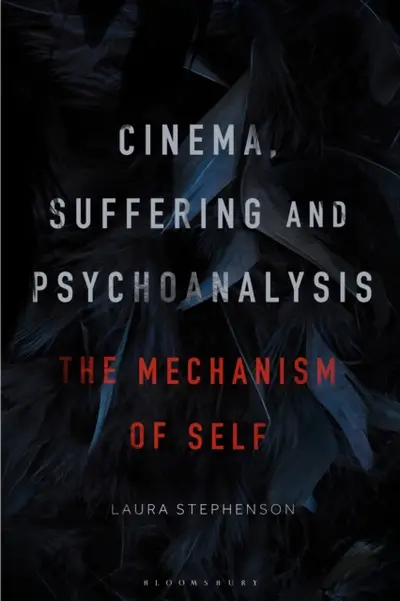
Cinema, Suffering and Psychoanalysis
The Mechanism of Self
Price and availability
$35.99
Available in: Andorra, Austria, Australia, Belgium, Bulgaria, Canada, Switzerland, Cyprus, Czechia, Germany, Denmark, Estonia, Spain, Finland, France, United Kingdom, Guernsey, Greece, Croatia, Hungary, Ireland, Isle of Man, Iceland, Italy, Jersey, Japan, Liechtenstein, Lithuania, Luxembourg, Latvia, Monaco, Malta, Netherlands, Norway, Poland, Portugal, Romania, Sweden, Slovenia, Slovakia, San Marino, United States, Vatican City, South Africa
Stores: US, UK, Canada, EU, Australia.
Sign in to buyThe price is re-checked by the server before payment.
For personal use under the eBook licence.
- Format
- DRM
- Not stated by the publisher
- Language
- English
- Publisher
- Bloomsbury Publishing (USA)
- Published
- 14 December 2023
- Pages
- 232
- ISBN
- 9798765105641
- Subjects
- Film theory & criticism, Psychology, ATFA, Psychology
About this book
Cinema, Suffering and Psychoanalysis explores psychological disorder as common to the human condition using a unique three-angled approach: psychoanalysis recognises the inherent suffering encountered by each subject due to developmental phases; psychology applies specific categorisation to how this suffering manifests; cinema depicts suffering through a combination of video and aural elements. Functioning as a culturally reflexive medium, the six feature films analysed, including Black Swan (2010) and The Machinist (2004), represent some of the most common psychological disorders and lived experiences of the contemporary era. This book enters unchartered terrain in cinema scholarship by combining clinical psychology's Diagnostic and Statistical Manual Five (DSM-V) to organise and diagnose each character, and psychoanalysis to track the origin, mechanism and affect of the psychological disorder within the narrative trajectory of each film. Lacan's theories on the infantile mirror phase, the Imaginary, and the Symbolic, Zizek's theories on the Real, the big Other and the Event, and Kristeva's theories on abjection and melancholia work in combination with the DSM's classification of symptoms to interpret six contemporary pieces of cinema. By taking into consideration that origin, mechanism, affect and symptomatology are part of an interconnected group, this book explores psychological disorder as part of the human condition, something which contributes to and informs personal identity. More specifically, this research refutes the notion that psychological disorder and psychological health exist as a binary, instead recognising that what has traditionally been pathologised, may instead be viewed as variations on human identity.
Bibliographic data © Gardners Books Ltd.