PDF · English
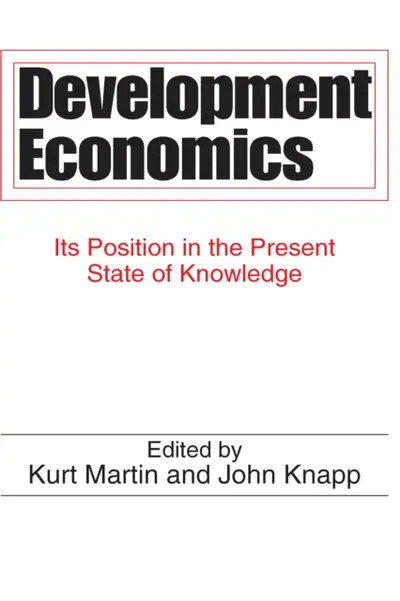
Development Economics
Its Position in the Present State of Knowledge
Price and availability
$67.99
Available in: Andorra, Austria, Australia, Belgium, Bulgaria, Canada, Switzerland, Cyprus, Czechia, Germany, Denmark, Estonia, Spain, Finland, France, United Kingdom, Guernsey, Greece, Croatia, Hungary, Ireland, Isle of Man, Iceland, Italy, Jersey, Japan, Liechtenstein, Lithuania, Luxembourg, Latvia, Monaco, Malta, Netherlands, Norway, Poland, Portugal, Romania, Sweden, Slovenia, Slovakia, San Marino, United States, Vatican City, South Africa
Stores: US, UK, Canada, EU, Australia.
Sign in to buyThe price is re-checked by the server before payment.
For personal use under the eBook licence.
- Format
- DRM
- Not stated by the publisher
- Language
- English
- Publisher
- Taylor & Francis
- Published
- 6 February 2018
- ISBN
- 9781351522434
- Subjects
- Economics, Development economics & emerging economies, Teaching of a specific subject, Development economics and emerging economies
About this book
Interest in the problems of underdeveloped economies has increased since the early 1950s, and is now a primary topic in university courses. When this book was originally published, it reflected a sense among some economists that current, orthodox economic theory is inadequate in this field.The volume includes leading American and non-American economists. The discussion of the content of courses was, in the nature of things, an extension of the discussion on the state of knowledge and reflects the period immediately prior to initial publication. Some of the issues continue to be debated, including the balance of instruction between macro- and micro-economics, the place of mathematics and econometrics, the question of the desirability of linking the study of economics with studies in administration, languages, political science, sociology or even engineering.Development economics is now an established subject in the teaching curricula of most universities. The attention of the volume is focused on the problems of creating courses of study in subjects relevant to development within some framework specially designed for the purpose. The problems of organizing such courses concerned the length of courses, the type of students to which they would cater, the qualifications and standards required for admission and successful completion of courses, and so on.The balance of instruction between macro- and micro-economics, the place of mathematics and econometrics, the question of the desirability of linking the study of economics with studies in administration, languages (in connection with area studies), political science, sociology or even engineering, the merits of methods like case studies, workshops and training in field work, are all discussed.
Bibliographic data © Gardners Books Ltd.