PDF · English
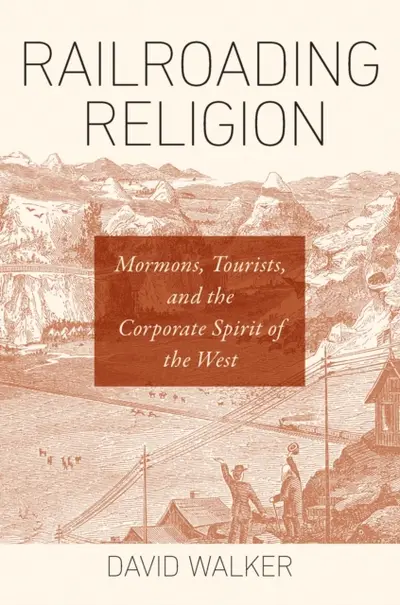
Railroading Religion
Mormons, Tourists, and the Corporate Spirit of the West
Price and availability
$155.99
Available in: Andorra, Austria, Australia, Belgium, Bulgaria, Canada, Switzerland, Cyprus, Czechia, Germany, Denmark, Estonia, Spain, Finland, France, United Kingdom, Guernsey, Greece, Croatia, Hungary, Ireland, Isle of Man, Iceland, Italy, Jersey, Japan, Liechtenstein, Lithuania, Luxembourg, Latvia, Monaco, Malta, Netherlands, Norway, Poland, Portugal, Romania, Sweden, Slovenia, Slovakia, San Marino, United States, Vatican City, South Africa
Stores: US, UK, Canada, EU, Australia.
Sign in to buyThe price is re-checked by the server before payment.
For personal use under the eBook licence.
- Format
- DRM
- Not stated by the publisher
- Language
- English
- Publisher
- The University of North Carolina Press
- Published
- 30 September 2019
- ISBN
- 9798890852885
- Subjects
- Western & Pacific Coast states, General & world history, History of the Americas, History of religion, Other Nonconformist & Evangelical Churches, Other non-Christian religions, US West, History of the Americas, History of religion, Denominations of American origin, Local history
About this book
Railroads, tourism, and government bureaucracy combined to create modern religion in the American West, argues David Walker in this innovative study of Mormonisms ascendency in the railroad era. The center of his story is Corinne, Utahan end-of-the-track, hell-on-wheels railroad town founded by anti-Mormon businessmen. In the disputes over this towns frontier survival, Walker discovers intense efforts by a variety of theological, political, and economic interest groups to challenge or secure Mormonisms standing in the West. Though Corinnes founders hoped to leverage industrial capital to overthrow Mormon theocracy, the town became the site of a very different dream.Economic and political victory in the West required the production of knowledge about different religious groups settling in its lands. As ordinary Americans advanced their own theories about Mormondom, they contributed to the rise of religion itself as a category of popular and scholarly imagination. At the same time, new and advantageous railroad-related alliances catalyzed LDS Church officials to build increasingly dynamic religious institutions. Through scrupulous research and wide-ranging theoretical engagement, Walker shows that western railroads did not eradicate or diminish Mormon power. To the contrary, railroad promoters helped establish Mormonism as a normative American religion.
Bibliographic data © Gardners Books Ltd.