PDF · English
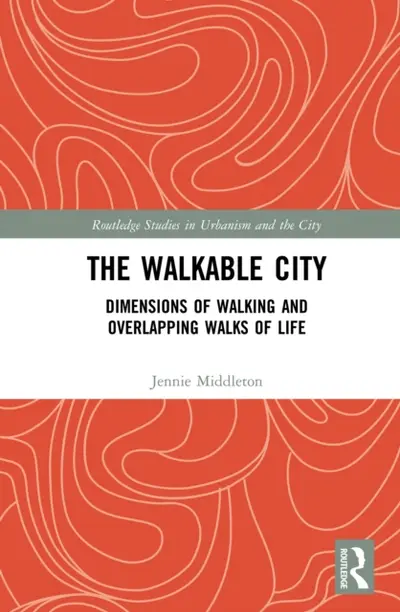
Walkable City
Dimensions of Walking and Overlapping Walks of Life
Price and availability
$63.99
Available in: Andorra, Austria, Australia, Belgium, Bulgaria, Canada, Switzerland, Cyprus, Czechia, Germany, Denmark, Estonia, Spain, Finland, France, United Kingdom, Guernsey, Greece, Croatia, Hungary, Ireland, Isle of Man, Iceland, Italy, Jersey, Japan, Liechtenstein, Lithuania, Luxembourg, Latvia, Monaco, Malta, Netherlands, Norway, Poland, Portugal, Romania, Sweden, Slovenia, Slovakia, San Marino, United States, Vatican City, South Africa
Stores: US, UK, Canada, EU, Australia.
Sign in to buyThe price is re-checked by the server before payment.
For personal use under the eBook licence.
- Format
- DRM
- Not stated by the publisher
- Language
- English
- Publisher
- Taylor & Francis
- Published
- 18 August 2021
- ISBN
- 9781315519203
- Subjects
- Interdisciplinary studies, Urban communities, Geography, Human geography, Urban & municipal planning, Sports & outdoor recreation, Walking, hiking, trekking, Social geography, Settlement, urban and rural geography, Transport planning and policy
About this book
This book explores everyday walking in contemporary urban life. It brings together important theoretical and empirical insights to understand how the 'walkability' of urban spaces can be imagined, planned for, and experienced.The book focuses on the everyday experiences of the urban walker, the bodily experiences of walking, and different walking research methods. It goes beyond the conventional focus on walkable places by delving into the ways in which urban space is consumed and produced through different ways of walking. Drawing on fieldwork in the UK and international secondary sources, the book examines how walking is socially and materially co-produced, focusing on pedestrian practices, infrastructures, and the social nature of walking. Chapters in the book offer key explorations of the cultural and social inclusions and exclusions of navigating the city on foot. The book considers transport planning and policy promoting pedestrian movement, pedestrian infrastructures, the politics of walking, and social interactions of urban pedestrians. The book offers vital analyses of how different but overlapping dimensions of walking and their relationship with urban space are often overlooked, and the importance of centring the lived experiences of walking in understandings of pedestrian practices.This book provides a timely contribution to the field of mobilities due to a growing interest in urban walking. It will be of interest to students and scholars of urban studies, human geography, sociology, and public health.
Bibliographic data © Gardners Books Ltd.