EPUB · English
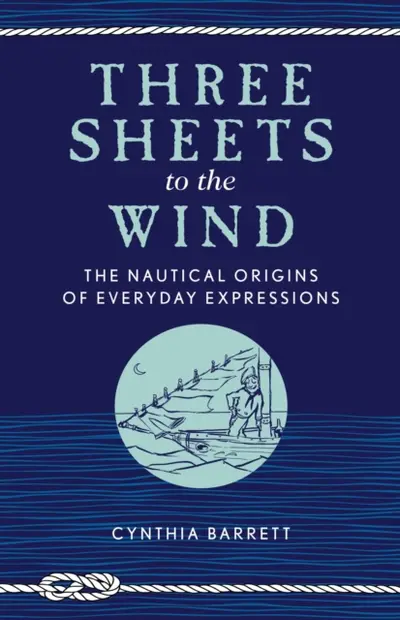
Three Sheets to the Wind
The Nautical Origins of Everyday Expressions
Price and availability
$20.99
Available in: Andorra, Austria, Australia, Belgium, Bulgaria, Canada, Switzerland, Cyprus, Czechia, Germany, Denmark, Estonia, Spain, Finland, France, United Kingdom, Guernsey, Greece, Croatia, Hungary, Ireland, Isle of Man, Iceland, Italy, Jersey, Japan, Liechtenstein, Lithuania, Luxembourg, Latvia, Monaco, Malta, Netherlands, Norway, Poland, Portugal, Romania, Sweden, Slovenia, Slovakia, San Marino, United States, Vatican City, South Africa
Stores: US, UK, Canada, EU, Australia.
Sign in to buyThe price is re-checked by the server before payment.
For personal use under the eBook licence.
- Format
- EPUB
- DRM
- Not stated by the publisher
- Language
- English
- Publisher
- Globe Pequot Publishing
- Published
- 1 June 2019
- ISBN
- 9781493042289
- Subjects
- English, Reference works, Dictionaries of quotations, Navigation & seamanship, Sailing, Quotations, proverbs and sayings, Sailing / yachting
About this book
The origins of a remarkable number of everyday words and phrases are anchored in our seafaring past. Three Sheets to the Wind: The Nautical Origins of Everyday Expressions is an entertaining compilation revealing the maritime roots of common English expressions. The original ';slush fund' was the fatty scraps from boiled meat that the ship's cook secretly stashed away to sell at port to candle makers. The man who originally ';turned a blind eye' was Admiral Nelson. In one of Naval history's most famous acts of insubordination, Nelson, in the heat of battle, raised his telescope to his blind eye and announced he could not see the signal flag commanding him to break off action. The perfect companion for etymology lovers, factophiles, ocean dreamers, and the conversationally curious, Three Sheets to the Wind features 200 words and expressions that are nautically inspired. Alphabetically organized (from A to Sea) readers can also enjoy 100 original illustrations as well as relevant excerpts from the great novels of Melville, Forester, O'Brian, and others. These passages illustrate how such literary giants reached for these expressions in their classic masterpieces. Our everyday speech is peppered with language used by sailors when someone says they are ';pooped' because they stayed to the ';bitter end' of ';happy hour'.
Bibliographic data © Gardners Books Ltd.