EPUB · English
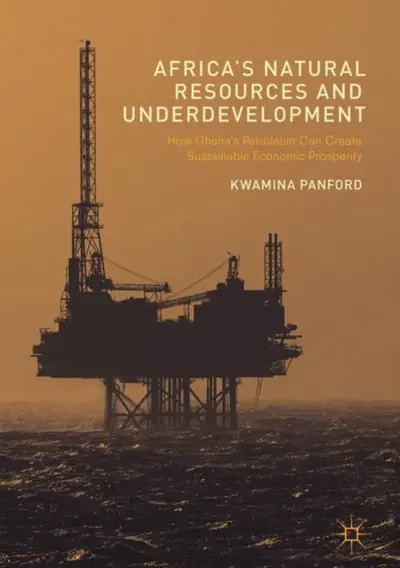
Africa's Natural Resources and Underdevelopment
How Ghana’s Petroleum Can Create Sustainable Economic Prosperity
Price and availability
$148.99
Available in: Andorra, Austria, Australia, Belgium, Bulgaria, Canada, Switzerland, Cyprus, Czechia, Germany, Denmark, Estonia, Spain, Finland, France, United Kingdom, Guernsey, Greece, Croatia, Hungary, Ireland, Isle of Man, Iceland, Italy, Jersey, Japan, Liechtenstein, Lithuania, Luxembourg, Latvia, Monaco, Malta, Netherlands, Norway, Poland, Portugal, Romania, Sweden, Slovenia, Slovakia, San Marino, United States, Vatican City, South Africa
Stores: US, UK, Canada, EU, Australia.
Sign in to buyThe price is re-checked by the server before payment.
For personal use under the eBook licence.
- Format
- EPUB
- DRM
- Not stated by the publisher
- Language
- English
- Publisher
- Palgrave Macmillan US
- Published
- 2 February 2017
- ISBN
- 9781137540720
- Subjects
- Africa, Economics, Economics of industrial organisation, Development economics & emerging economies, International business, Industry & industrial studies, Energy industries & utilities, The environment, Africa, Economics, Economics of industrial organization, Development economics and emerging economies, Energy industries and utilities, The environment
About this book
This book explores how African countries can convert their natural resources, particularly oil and gas, into sustainable development assets. Using Ghana, one of the continent's newest oil-producing countries, as a lens, it examines the "e;resource curse"e; faced by other producers - such as Nigeria, Angola, and Equatorial Guinea - and demonstrates how mismanagement in those countries can provide valuable lessons for new oil producers in Africa and elsewhere. Relying on a broad range of fieldwork and policymaking experience, Panford suggests practical measures for resource-rich developing countries to transform natural resources into valuable assets that can help create jobs, boost human resources, and improve living and working conditions in Ghana in particular. He suggests fiscal, legal, and environmental antidotes to resource mismanagement, which he identifies as the major obstacle to socioeconomic development in countries that have historically relied on natural resources.
Bibliographic data © Gardners Books Ltd.