EPUB · English
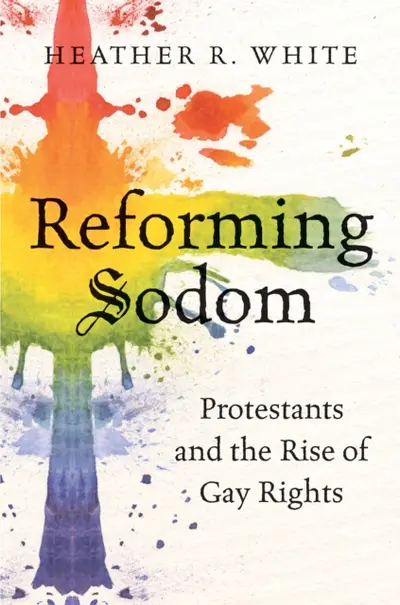
Reforming Sodom
Protestants and the Rise of Gay Rights
Price and availability
$77.99
Available in: Andorra, Austria, Australia, Belgium, Bulgaria, Canada, Switzerland, Cyprus, Czechia, Germany, Denmark, Estonia, Spain, Finland, France, United Kingdom, Guernsey, Greece, Croatia, Hungary, Ireland, Isle of Man, Iceland, Italy, Jersey, Japan, Liechtenstein, Lithuania, Luxembourg, Latvia, Monaco, Malta, Netherlands, Norway, Poland, Portugal, Romania, Sweden, Slovenia, Slovakia, San Marino, United States, Vatican City, South Africa
Stores: US, UK, Canada, EU, Australia.
Sign in to buyThe price is re-checked by the server before payment.
For personal use under the eBook licence.
- Format
- EPUB
- DRM
- Not stated by the publisher
- Language
- English
- Publisher
- The University of North Carolina Press
- Published
- 24 August 2015
- ISBN
- 9781469624792
- Subjects
- Protestantism & Protestant Churches, Christian social thought & activity, Gay & Lesbian studies, Gay studies (Gay men), Demonstrations & protest movements, LGBTQIA+ Studies / topics, Protestantism and Protestant Churches, Christian life and practice, Religious social and pastoral thought and activity
About this book
With a focus on mainline Protestants and gay rights activists in the twentieth century, Heather R. White challenges the usual picture of perennial adversaries with a new narrative about Americas religious and sexual past. White argues that todays antigay Christian traditions originated in the 1920s when a group of liberal Protestants began to incorporate psychiatry and psychotherapy into Christian teaching. A new therapeutic orthodoxy, influenced by modern medicine, celebrated heterosexuality as God-given and advocated a compassionate cure for homosexuality.White traces the unanticipated consequences as the therapeutic model, gaining popularity after World War II, spurred mainline church leaders to take a critical stance toward rampant antihomosexual discrimination. By the 1960s, a vanguard of clergy began to advocate for homosexual rights. White highlights the continued importance of this religious support to the consolidating gay and lesbian movement. However, the ultimate irony of the therapeutic orthodoxys legacy was its adoption, beginning in the 1970s, by the Christian Right, which embraced it as an age-old tradition to which Americans should return. On a broader level, White challenges the assumed secularization narrative in LGBT progress by recovering the forgotten history of liberal Protestants' role on both sides of the debates over orthodoxy and sexual identity.
Bibliographic data © Gardners Books Ltd.