PDF · English
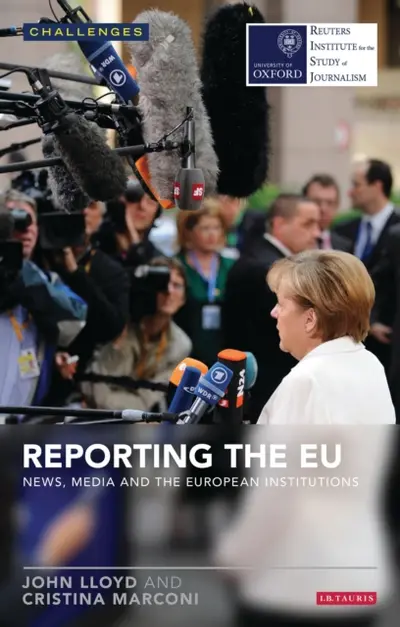
Reporting the EU
News, Media and the European Institutions
Price and availability
$24.99
Available in: Andorra, Austria, Australia, Belgium, Bulgaria, Canada, Switzerland, Cyprus, Czechia, Germany, Denmark, Estonia, Spain, Finland, France, United Kingdom, Guernsey, Greece, Croatia, Hungary, Ireland, Isle of Man, Iceland, Italy, Jersey, Japan, Liechtenstein, Lithuania, Luxembourg, Latvia, Monaco, Malta, Netherlands, Norway, Poland, Portugal, Romania, Sweden, Slovenia, Slovakia, San Marino, United States, Vatican City, South Africa
Stores: US, UK, Canada, EU, Australia.
Sign in to buyThe price is re-checked by the server before payment.
For personal use under the eBook licence.
- Format
- DRM
- Not stated by the publisher
- Language
- English
- Publisher
- Bloomsbury Publishing
- Published
- 30 September 2014
- Pages
- 128
- ISBN
- 9780857724595
- Subjects
- Europe, Press & journalism, KNTP2
About this book
In recent years, media coverage of the European Union has faced its most serious test. The interlinked crises in the Union have severely tested the expertise of the EU press corps, many of whom have struggled to cope with its complexities, and have thrown into sharper relief the differences among the national coverages. At the same time, the crises have deepened trends towards euro scepticism in many EU member states - thus putting pressure on correspondents to be more sceptical, analytical, argumentative and even hostile, in their reporting. This development has revealed a greater gulf between reporters - who are now more sceptical than their predecessors - and the press service and officials of the EU, who remain strongly committed to the narrative of an 'ever-closer union'. Yet - in contrast to the rising euro scepticism - the crises have emphasised the need perceived by European officials and many European politicians for deeper integration, at least among Euro currency members, to cope with the crisis.This book, based on extensive interviews with EU correspondents, editors, public relations and other EU executives, will reveal for the first time how this powerful group of institutions at the heart of the Union are covered - or are not covered. The analysis and critique of the present coverage also carries a series of recommendations on how it might be made to better serve the citizens of the EU members. The authors highlight the structural and historic difficulties in covering a multinational institution, and the struggle - generally unsuccessful - to develop a journalism which can fully hold the institutions to account, and find an audience which goes beyond the narrow circles of professionals and politicians who are closely concerned with the business of the Union.
Bibliographic data © Gardners Books Ltd.