EPUB · English
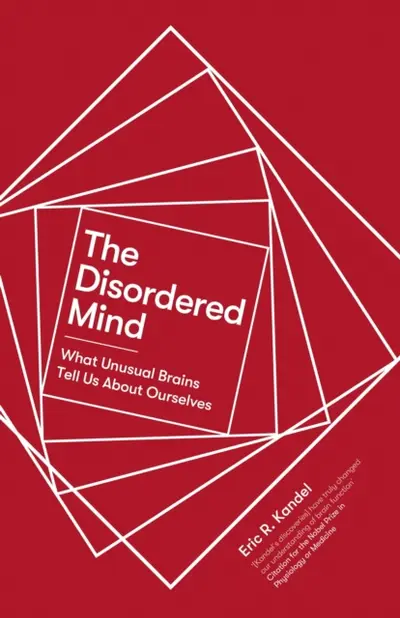
Disordered Mind
What Unusual Brains Tell Us About Ourselves
Price and availability
Not sold in this region
Available in: Andorra, Austria, Australia, Belgium, Bulgaria, Switzerland, Cyprus, Czechia, Germany, Denmark, Estonia, Spain, Finland, France, United Kingdom, Guernsey, Greece, Croatia, Hungary, Ireland, Isle of Man, Iceland, Italy, Jersey, Japan, Liechtenstein, Lithuania, Luxembourg, Latvia, Monaco, Malta, Netherlands, Norway, Poland, Portugal, Romania, Sweden, Slovenia, Slovakia, San Marino, Vatican City, South Africa
Stores: UK, EU, Australia. Not available in the United States store.
This title cannot be bought in this store yet: its supplier terms, territorial rights or price are still being confirmed.
For personal use under the eBook licence.
- Format
- EPUB
- DRM
- Not stated by the publisher
- Language
- English
- Publisher
- Little, Brown Book Group
- Published
- 27 September 2018
- ISBN
- 9781472140852
- Subjects
- Popular science, Neurosciences, Popular psychology, Popular science, Neurosciences, Popular psychology
About this book
Neurological and psychiatric disorders have long been regarded as fundamentally different, depending on whether they appear to affect the brain or the mind. In reality, the brain and the mind are inseparable. Both types of disorder can affect every aspect of brain function: from perception, action, memory and emotion to empathy, social interaction, attention and consciousness. It is easy to view brain disorders as simply tragic or frightening. However, studying where these functions go wrong provides a window on the workings of the healthy brain, and makes it more likely that scientists and clinicians will be able to develop effective treatments or preventative strategies. As individuals, and as a society, we are also able to better empathise with people with disorders of the mind.Building on his pioneering research, Eric R. Kandel illustrates how breakthrough studies of brain disruptions can deepen our understanding of thought, feeling, behaviour, memory and creativity, and perhaps in the future will transform medical care and lead to the development of a unified theory of mind.
Bibliographic data © Gardners Books Ltd.